Fence installation involves more than placing posts and attaching panels. Contractors must prepare post locations, manage soil conditions, create suitable openings, and move materials across the worksite. On large properties or projects with difficult access, a mini excavator can help reduce manual excavation and support a more organized installation process.
For fencing contractors, agricultural businesses, and equipment dealers, understanding how compact excavators fit into fence installation is important when selecting machinery for this type of work.
Fence projects vary considerably. A residential garden fence may require only a limited number of post holes, while agricultural fencing can involve long property boundaries and uneven terrain.
A mini excavator can support several stages of the work:
Its compact design can be useful when working near buildings, garden boundaries, and existing structures.
However, the machine must be matched to the actual project. Fence length, post dimensions, soil conditions, access restrictions, and required excavation depth all influence equipment selection.
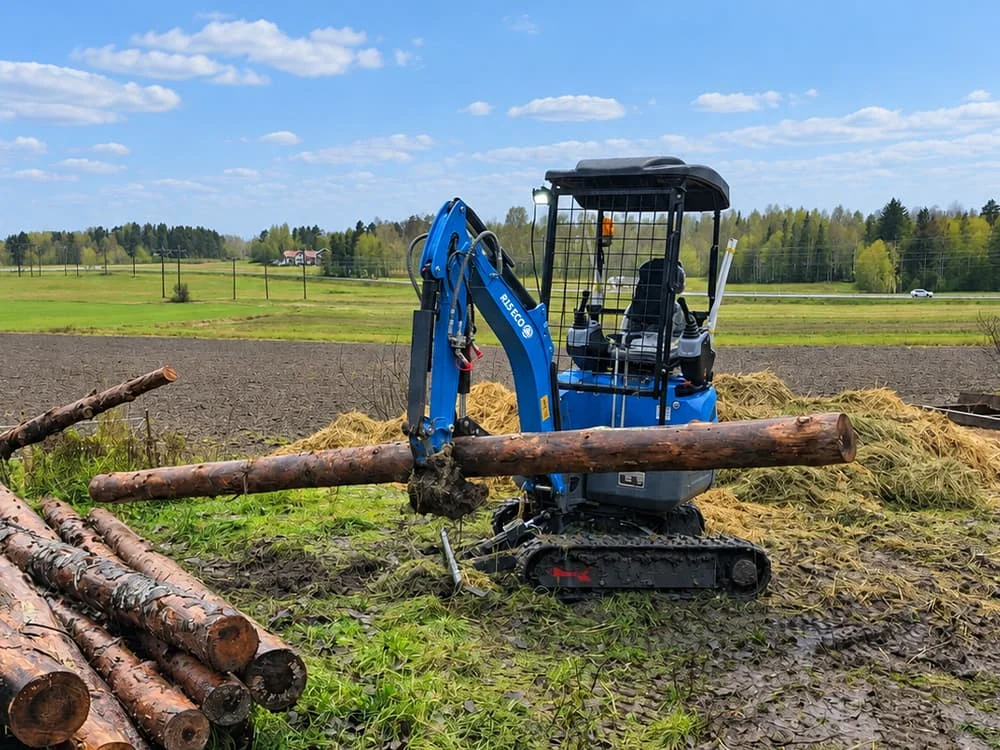
Post placement is one of the most important stages of fence installation. The required hole dimensions depend on the fence design, post material, soil conditions, and local construction requirements.
Before excavation begins, contractors should establish the fence line and mark the planned post positions.
Use the project plan to identify corners, gates, changes in direction, and intermediate post locations.
Accurate marking helps avoid unnecessary excavation and makes it easier to organize the work sequence.
Before digging, identify underground electrical cables, water lines, gas pipes, drainage systems, and other buried services.
Follow the utility-location procedures required in the project area. Never assume that an unmarked section of land is free of underground infrastructure.
A standard digging bucket may be suitable for some excavation tasks. Other projects may benefit from an auger attachment, provided it is compatible with the excavator and suitable for the ground conditions.
The correct choice depends on the post design, soil type, required hole dimensions, and available equipment.
An auger is commonly associated with fence post installation because it can create cylindrical holes in suitable ground conditions.
For contractors considering a mini excavator auger attachment, compatibility should be checked before purchasing or connecting the equipment.
Important questions include:
An auger that is suitable for one excavator may not be suitable for another.
Rocky ground, buried obstacles, tree roots, and very compacted soil can also affect drilling conditions. Contractors should inspect the site and follow the attachment manufacturer’s operating instructions.
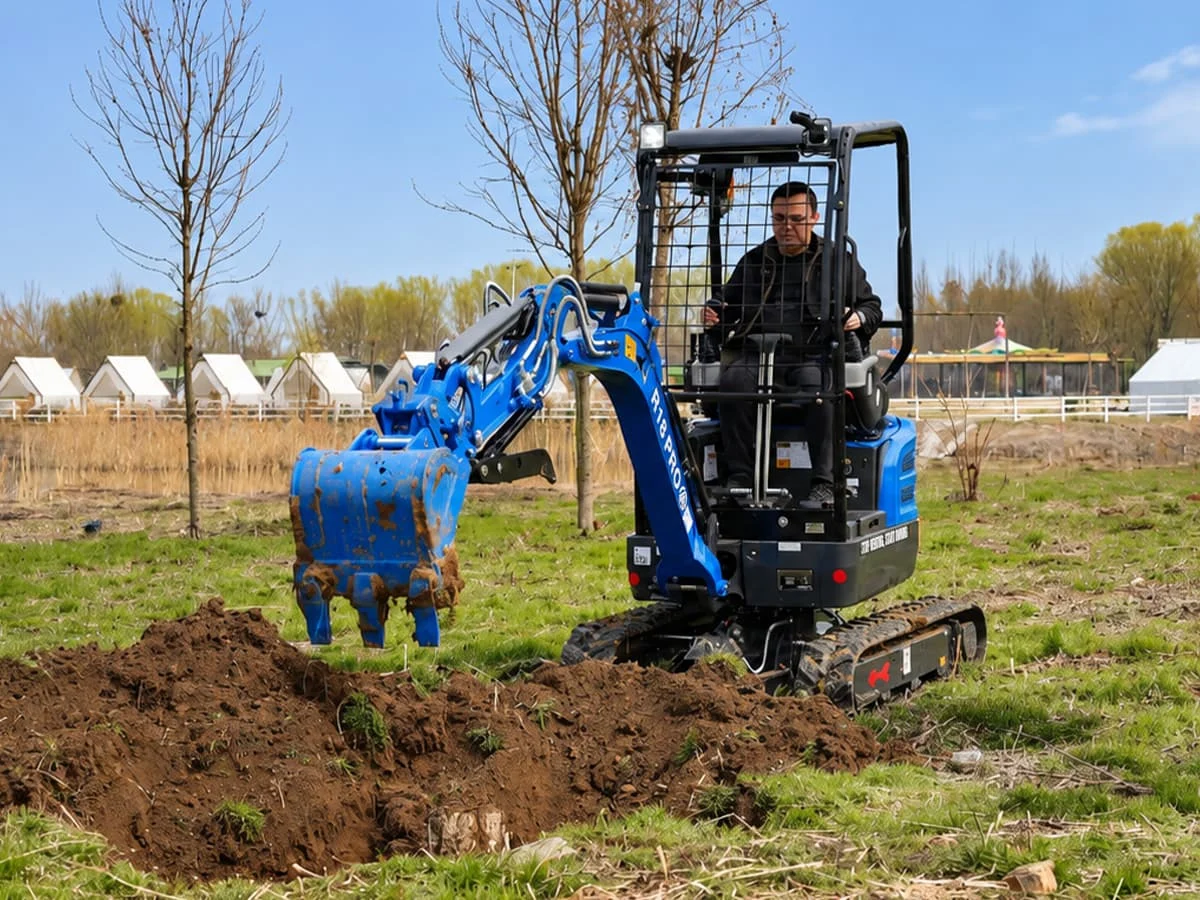
Some fence projects require more than individual post holes. Certain designs include shallow trenches for edging, underground services, drainage arrangements, or other project-specific components.
A mini excavator can assist with localized trench excavation when the required dimensions and site conditions are within the machine’s capabilities.
Before starting, contractors should confirm:
Trench route: Mark the intended route and check its relationship to existing structures and utilities.
Required dimensions: Follow the project design rather than estimating trench depth and width.
Ground conditions: Consider soil stability, moisture, roots, and buried obstacles.
Excavated material: Plan where removed soil will be placed so that it does not obstruct the work area.
Backfilling: Determine how the trench will be filled and compacted after the required installation work is completed.
For long fence lines, a planned excavation sequence can help reduce repeated machine repositioning.
Not every fence project takes place on an open, level property. Site conditions can change the way contractors select and operate their equipment.
Residential fencing may involve narrow access gates, landscaped areas, driveways, and nearby buildings.
Contractors should consider the machine’s overall dimensions, access clearance, surface protection, and the space needed for safe operation.
Farm fencing can involve long boundaries, uneven terrain, soft ground, and areas with limited vehicle access.
A mini excavator may assist with localized excavation and post preparation. Contractors should assess ground bearing conditions and whether the machine can safely reach each working area.
Commercial fencing may require work around parking areas, utilities, existing structures, and established traffic routes.
The excavation plan should account for site access, pedestrian movement, utility locations, and coordination with other contractors.
Fence contractors should select equipment according to their typical projects rather than focusing on one specification.
Consider these factors before purchasing.
Measure the narrowest access point and compare it with the machine’s actual dimensions. Also consider transportation requirements between projects.
Review the required excavation depth, working reach, and post hole dimensions. Confirm that the selected model can perform the intended work.
If an auger or another hydraulic attachment is required, obtain written confirmation of compatibility with the exact excavator configuration.
Consider soil type, ground slope, available working space, and the frequency of fence installation projects.
Ask the supplier about routine maintenance, replacement parts, and documentation for the machine and its attachments.
Contractors working across multiple properties should consider trailer compatibility, loading arrangements, and applicable transportation regulations.
A well-planned installation process helps reduce avoidable problems.
Common mistakes include:
Contractors should review the project requirements, machine documentation, and attachment instructions before beginning work.
Yes. A mini excavator can assist with post location preparation, localized excavation, trenching, and material handling when the machine is suitable for the project.
It can prepare post holes using an appropriate bucket or a compatible auger attachment. The correct method depends on the post design, soil conditions, and required hole dimensions.
Not always. Some projects can be completed with a standard bucket, while others may benefit from an auger. Contractors should compare the required hole shape, soil conditions, and attachment compatibility.
Important considerations include machine dimensions, digging capability, attachment compatibility, working conditions, transportation, maintenance, and parts availability.
Potentially, depending on the machine configuration and project requirements. Buyers should compare access conditions, ground types, post dimensions, and the amount of excavation required.
A mini excavator can be a useful addition to a fencing contractor’s equipment fleet when projects involve repeated post preparation, localized trenching, and work across different property types.
The best purchasing decision begins with an understanding of the actual installation process. Contractors should identify their common fence designs, check site conditions, and confirm attachment compatibility before choosing a machine.
RIPPA offers mini excavator models for different working applications. Buyers considering a machine for fencing projects should review the official model information and confirm the required configuration and attachment compatibility before ordering.
Contact RIPPA to discuss mini excavator models and wholesale purchasing requirements for your target market.
Tel: +8615628788742
Correio eletrónico: contact02@rippa.com
WhatsApp: Escavadora Rippa
Endereço: O sexto parque industrial, cidade de Jining, província de Shandong, China

 PT
 EN
 ES
 IT
 FR
 RU
 DE
 TR
 BG
 HR
 RO
 CS
 NN
 SL
 SV
 HU
 SK
 DA
 FI
 PL
 PT_BR

