Spare parts planning is essential for mini excavator dealers who want to maintain customer satisfaction, reduce equipment downtime, and control inventory costs. Without proper planning, dealers may face parts shortages, delayed repairs, and unnecessary inventory expenses.
For businesses offering mini excavators for sale, spare parts availability is an important part of long-term customer service. Buyers often consider whether replacement parts will be available before choosing an equipment supplier.
An effective spare parts strategy should identify essential components, forecast future demand, establish suitable stock levels, evaluate suppliers, and monitor inventory performance.
Dealers should prioritize frequently replaced components, routine maintenance items, and parts that are critical to equipment operation.
Common mini excavator parts include engine oil filters, fuel filters, air filters, hydraulic filters, belts, seals, and other routine maintenance components.
These items may require replacement at different service intervals, depending on equipment specifications and operating conditions.
Keeping commonly requested maintenance parts available helps dealers support regular customer servicing without unnecessary delays.
Undercarriage and working equipment components experience wear during daily operation.
Dealers should evaluate demand for tracks, bucket teeth, pins, bushings, hydraulic hoses, and related replacement components.
However, not every component requires the same inventory quantity. Frequently requested parts deserve higher priority than expensive components with limited demand.
Mini excavator accessories, including buckets and compatible attachments, should be managed separately from routine replacement parts.
Dealers can select accessory inventory based on customer applications, local market requirements, and previous sales.
This approach prevents attachment inventory from consuming funds needed for essential maintenance parts.

Accurate demand forecasting helps dealers prepare inventory before customers require replacement parts.
Mini excavator operating hours provide useful information about equipment usage and potential maintenance requirements.
Machines operating frequently may require more maintenance supplies than equipment used occasionally.
Dealers can estimate future demand by reviewing machine operating hours alongside manufacturer maintenance recommendations.
For example, if several customers are approaching a scheduled filter replacement, dealers can prepare the necessary parts before their service appointments.
Equipment sales records also help predict spare parts demand.
As the number of machines operating in a dealer’s service area increases, demand for maintenance components may grow.
Dealers should track active equipment, customer locations, common applications, and historical parts orders.
These records help identify which components are most likely to require replenishment.
Review monthly parts sales, maintenance requests, and repair history to identify consumption patterns.
Seasonal construction activity may increase demand during certain periods.
Combining operating hours, customer activity, and historical consumption provides a more reliable forecast than relying on sales volume alone.

The right inventory quantity depends on customer demand, supplier lead times, equipment population, and the importance of each component.
Dealers should divide spare parts into three categories:
High-demand components generally require regular stock replenishment. Low-demand items may be purchased when needed, depending on customer service requirements.
A practical reorder point can be calculated using:
Reorder Point = Average Daily Demand × Supplier Lead Time + Safety Stock
For example, if a dealer sells two filters per day, supplier delivery takes ten days, and safety stock is five filters:
Reorder Point = 2 × 10 + 5 = 25 filters
The dealer should initiate replenishment when the inventory position reaches 25 filters.
The reorder quantity should then reflect expected demand, ordering costs, storage capacity, and the desired service level.
Safety stock protects dealers against unexpected customer demand and supplier delays.
Parts with unpredictable consumption or long delivery times may require additional protection.
A dealer’s mini excavator maintenance schedule can help anticipate service-related demand and reduce unnecessary emergency orders.
Inventory targets should be reviewed regularly rather than remaining fixed throughout the year.
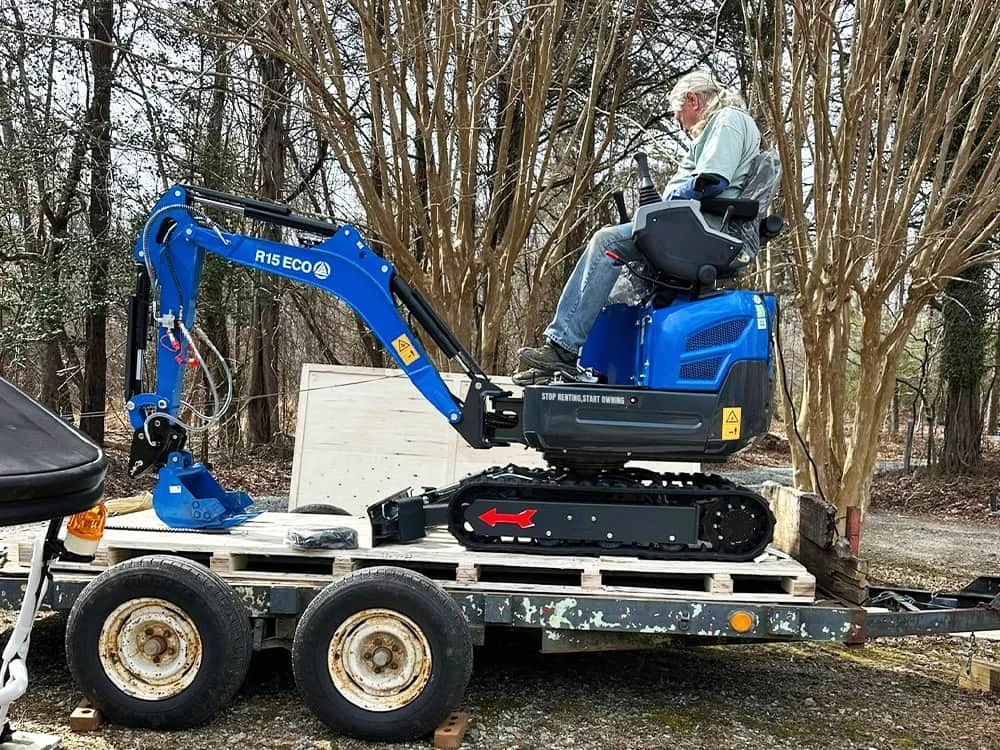
Reliable sourcing helps dealers maintain parts availability while reducing quality problems and supply interruptions.
When purchasing chinese mini excavator parts, dealers should verify part numbers, machine identification details, dimensions, and technical compatibility.
Similar-looking components may not be interchangeable.
Confirming compatibility before placing orders helps prevent incorrect purchases and unnecessary returns.
Dealers comparing excavator parts for sale should consider more than purchase price.
Important supplier evaluation factors include product consistency, parts identification accuracy, order processing, delivery reliability, and communication.
Requesting clear product information and confirming purchasing requirements can reduce supply chain uncertainty.
International purchasing may involve manufacturing preparation, shipping, customs processing, and local transportation.
Dealers should understand expected delivery times before setting reorder points.
Combining regularly required components into planned orders may reduce purchasing administration and freight expenses.
However, urgent parts should receive priority when customer equipment is waiting for repair.
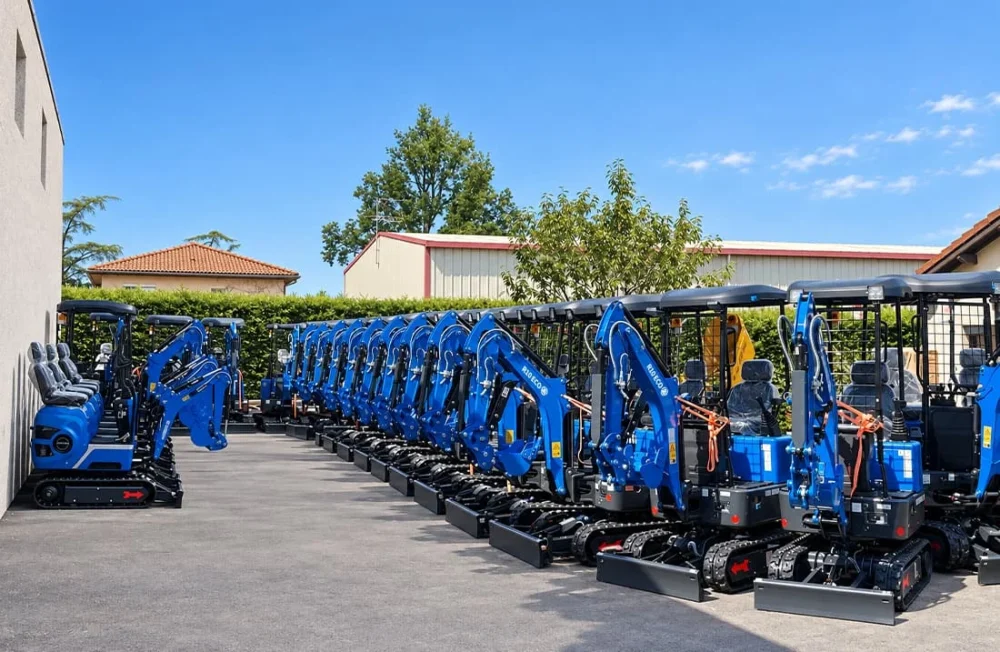
Effective inventory management requires balancing parts availability, customer service, and working capital.
Parts turnover indicates how quickly inventory is sold or consumed.
Dealers should identify slow-moving components and review whether their stock quantities remain appropriate.
Excessive inventory increases storage expenses and ties up capital. Insufficient inventory can delay customer repairs.
Regular inventory reviews help dealers adjust purchasing decisions based on actual demand.
A structured mini excavator maintenance program can improve inventory planning.
Dealers should compare expected maintenance needs with current stock levels and upcoming deliveries.
For scheduled mini excavator servicing, commonly required filters, lubricants, and replacement components can be prepared in advance.
This approach helps reduce waiting time while avoiding unnecessary inventory accumulation.
Reliable equipment sourcing and spare parts planning are important considerations for international machinery dealers.
RIPPA is a construction machinery manufacturer offering opportunities for international distribution cooperation.
Dealers interested in developing their mini excavator business can discuss equipment sourcing, replacement parts requirements, and potential long-term cooperation with RIPPA.
Explore RIPPA distributor opportunities to learn more about potential dealership partnerships.

Dealers should prioritize filters, seals, hydraulic hoses, and commonly replaced wear parts based on local demand.
Inventory quantities should reflect average demand, supplier lead times, safety stock, and customer service requirements.
Use demand forecasts, reorder points, regular stock reviews, and reliable suppliers to reduce excess inventory and prevent shortages.
Tel: +8615628788742
Email: contact02@rippa.com
WhatsApp: Rippa Excavator
Address: The sixth industrial park,Jining city,Shandong Province,China

 EN
 ES
 IT
 FR
 RU
 DE
 PT
 TR
 BG
 HR
 RO
 CS
 NN
 SL
 SV
 HU
 SK
 DA
 FI
 PL
 PT_BR

