Transporting a mini excavator requires more planning than simply placing the machine on a trailer and driving to the destination. Buyers need to consider machine dimensions, total transportation weight, trailer capacity, loading conditions, securing methods and local transportation regulations.
For equipment dealers and international importers, transportation planning should begin before confirming an equipment order. The selected machine configuration can affect trailer compatibility, shipping arrangements and final delivery costs.
A proper mini excavator transport plan helps buyers prepare the right transportation equipment, reduce handling risks and avoid unnecessary delays during delivery.
Whether moving a machine between construction sites or arranging transportation after an international purchase, understanding the main requirements is essential.
The first step is determining whether the selected transport vehicle can safely carry the complete machine and its accessories.
Mini excavators are available in different sizes and configurations. Their actual transportation requirements depend on the machine’s operating weight, dimensions, attachments and additional equipment.
Before selecting a trailer or truck, buyers should confirm the following information:
It is important to distinguish between a trailer’s gross vehicle weight rating and its available payload.
A trailer may have a high gross rating, but the trailer’s own weight reduces the amount of equipment it can legally and safely carry.
For example, if a trailer has a maximum authorized gross weight of 3,500 kg and its own empty weight is 900 kg, its theoretical payload is 2,600 kg, subject to the manufacturer’s ratings and applicable regulations.
Buyers should calculate the complete transport combination rather than relying only on the excavator’s advertised weight.
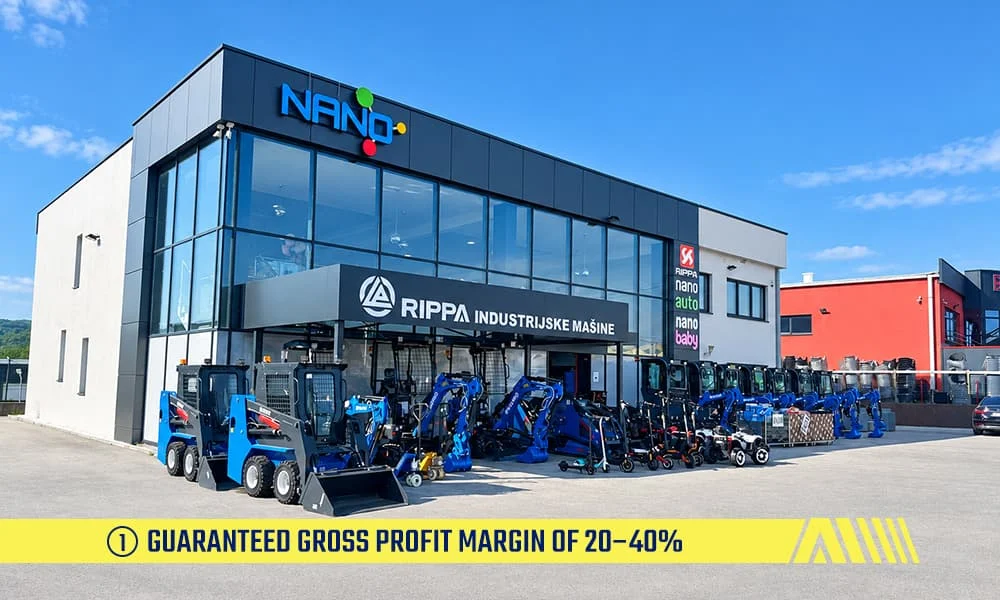
A suitable trailer should match the excavator’s weight, dimensions and loading requirements.
Choosing a trailer based only on its overall length is not sufficient. Its deck structure, axle capacity, braking system, ramp design and securing points must also be evaluated.
The trailer must have sufficient rated payload capacity for the complete load.
Include the excavator, attachments, accessories and any other items carried on the trailer.
Do not assume that a trailer is suitable simply because the excavator physically fits on its deck.
The usable deck should accommodate the excavator without creating unsafe overhangs or obstructing the required securing points.
Consider:
Track width.
Overall machine length.
Blade position.
Boom and attachment position.
Loading ramp clearance.
Available tie-down locations.
The loading ramps must be suitable for the machine’s weight and track configuration.
Buyers should check their load ratings, width, surface condition, attachment method and permitted loading angle.
A ramp that is too narrow, too steep or inadequately supported can create serious loading hazards.
The towing vehicle and trailer must be compatible in terms of authorized towing capacity, braking equipment, electrical connections and applicable road regulations.
For international equipment buyers, these requirements can differ significantly between countries.
Preparation helps reduce the possibility of damage during loading and transportation.
Before moving the machine onto a trailer, operators should follow the specific manufacturer’s operation and maintenance manual.
Important preparation steps include:
Clean the undercarriage
Remove accumulated mud, stones and debris from the tracks and undercarriage. This helps reduce slipping and makes inspection easier.
Check the machine condition
Look for visible fluid leaks, damaged hoses, loose components or other conditions that could affect safe transportation.
Review the attachment configuration
Confirm whether the bucket, blade and other attachments will remain installed during transportation.
Separate attachments should be accounted for and secured independently.
Secure loose items
Tools, removable accessories and other loose components should be placed in suitable storage or secured separately.
Check the machine’s identification and dimensions
Verify that the actual configuration matches the transportation plan.
For example, an enclosed cab may affect overall transport height compared with an open canopy configuration.
Loading is one of the most important stages of mini excavator transportation.
An improperly positioned machine or unsuitable loading ramp can lead to sliding, overturning or equipment damage.
The loading procedure should follow the manufacturer’s instructions and applicable safety requirements.
Before loading:
Park the trailer on firm, level ground.
Connect the trailer to the appropriate towing vehicle where required by the loading procedure.
Apply the parking brake.
Chock the trailer wheels.
Deploy stabilizers if required by the trailer manufacturer.
Position and secure the loading ramps correctly.
Remove mud, oil and loose debris from the loading surface.
The working area should be sufficiently clear to allow controlled machine movement.
The ramps must be properly aligned with the machine’s travel path.
They should have sufficient width and load capacity for the excavator.
Never assume that a ramp is suitable simply because it can support a person or a smaller vehicle.
The operator should use controlled movements and avoid sudden acceleration, sharp steering or unnecessary attachment movement.
A trained spotter may help when visibility is restricted, provided communication is clear and the spotter remains outside hazardous areas.
The machine must be loaded using the procedure specified in its operation manual.
Do not improvise by using the boom or bucket to lift or reposition the excavator unless a manufacturer-approved procedure specifically allows it.
Once on the trailer, the excavator should be positioned according to the approved loading plan.
Its location must account for:
Trailer load distribution.
Axle loading limits.
Tongue weight requirements, where applicable.
Overall vehicle balance.
Clearance for attachments and tie-down equipment.
Correct positioning is essential for stable transportation.
After loading, the excavator must be secured against movement in every direction.
This is particularly important when transporting equipment over long distances or across roads with changing conditions.
Before securing the machine:
Lower the boom and arm into the manufacturer’s recommended transport position.
Place the bucket or attachment in the specified position.
Lower the dozer blade where instructed.
Stop the engine.
Apply the parking brake and activate the required safety locks.
The machine should be left in a stable transportation position.
Use the designated securing points identified in the machine’s manual.
Suitable chains, binders or other approved restraint equipment should be selected according to the machine’s weight and transportation requirements.
Check:
Chain and strap condition.
Working load limits.
Hook compatibility.
Trailer anchor-point capacity.
Tie-down angle and arrangement.
Potential contact with hydraulic hoses or other vulnerable components.
Never attach chains to random structural parts simply because they are convenient.
Buckets, hydraulic attachments and other removable equipment must also be secured.
If attachments are transported separately, they should be positioned and restrained so that they cannot slide, roll or interfere with the excavator.
Hydraulic hoses and exposed connectors should be protected from damage.
Before departure, inspect all securing devices.
Confirm that the excavator cannot shift during transportation and that no restraint equipment is damaged or incorrectly connected.
The manufacturer’s recommended tie-down arrangement and applicable load-securing regulations should always take priority.
For overseas buyers, transportation involves more than local trailer arrangements.
International deliveries may involve factory preparation, container loading, port handling, ocean transportation, customs clearance and final delivery.
Each stage requires accurate equipment information.
Before requesting a shipping quotation, buyers should obtain the actual dimensions and shipping weight of the ordered machine.
The information should reflect the final configuration.
Additional considerations may include:
Enclosed cab or canopy.
Installed bucket and attachments.
Track configuration.
Protective packaging.
Separate accessory packages.
Loading and unloading requirements.
Incorrect dimensions can affect container planning and transportation quotations.
Depending on the machine’s dimensions and shipping arrangements, different transportation methods may be considered.
Buyers and logistics providers should evaluate:
Available container dimensions.
Door opening dimensions.
Loading clearance.
Equipment positioning.
Securing arrangements.
Total cargo weight.
Port handling requirements.
Do not assume that every mini excavator can fit into the same container configuration.
The final loading plan should be confirmed using the actual machine dimensions and the logistics provider’s requirements.
International equipment shipments generally require accurate commercial and transportation documents.
Depending on the transaction and destination country, these may include:
| Document | Main Purpose |
|---|---|
| Commercial Invoice | Records the transaction and declared commercial value |
| Packing List | Identifies the shipped equipment and packages |
| Bill of Lading | Provides the ocean transportation record |
| Certificate of Origin | Establishes origin information where required |
| Product Documentation | Provides relevant machine identification and technical information |
| Customs Documents | Supports import clearance under destination requirements |
Document requirements vary by country, equipment category and shipping arrangement.
Importers should confirm the required documents with their customs broker and relevant authorities before shipment.
Transportation planning should not end when the machine leaves the factory.
A receiving inspection helps buyers identify visible shipping damage, missing accessories and documentation discrepancies.
After delivery, inspect the following items.
External condition
Check the body panels, tracks, boom, bucket, protective covers and other accessible components for visible damage.
Machine identification
Confirm that the model and serial number match the purchase documents.
Accessories and packages
Compare the received items with the packing list and agreed order.
Visible fluid leaks
Inspect accessible hydraulic and engine-related areas for signs of leakage.
Transportation damage
Look for damaged hoses, scratched surfaces, loose components or other signs of handling damage.
Documentation
Confirm that the expected shipping and product documents have been received.
Photograph any visible damage before moving or operating the equipment.
If discrepancies are discovered, document them promptly and communicate with the relevant supplier or transportation party according to the agreed delivery and claims procedures.
Even relatively small machines can create transportation problems when planning is incomplete.
Here are several mistakes buyers should avoid.
| Common Mistake | Potential Consequence | Recommended Approach |
|---|---|---|
| Choosing a trailer based only on length | Insufficient payload capacity | Verify rated payload and total load |
| Ignoring attachments in weight calculations | Overloading the transport vehicle | Calculate the complete transport configuration |
| Using unsuitable loading ramps | Slipping or structural failure | Verify ramp capacity and compatibility |
| Incorrect machine positioning | Unbalanced trailer load | Follow an approved loading plan |
| Using unapproved tie-down points | Equipment damage or load movement | Use manufacturer-designated securing points |
| Leaving attachments unsecured | Movement during transportation | Secure each attachment independently |
| Ignoring local regulations | Fines or transportation delays | Verify route and destination requirements |
| Skipping delivery inspection | Delayed identification of damage | Inspect and document the equipment on arrival |
A consistent transportation checklist can help dealers and importers avoid these problems across repeated equipment shipments.
For equipment distributors handling multiple orders, a standardized checklist can make transportation coordination more efficient.
Before transportation, verify:
For international shipments, buyers should also confirm container compatibility, shipping documentation, customs requirements and the receiving arrangements at the destination.
A suitable trailer must have sufficient payload capacity, appropriate deck dimensions, compatible loading ramps and approved securing points. The correct choice depends on the actual machine weight and configuration.
In many cases, yes, provided the manufacturer’s transportation instructions allow it and the trailer has sufficient capacity. The bucket must be positioned and secured correctly.
Use the manufacturer’s designated tie-down points and appropriately rated chains or other approved restraints. Secure the machine against forward, backward and sideways movement.
Buyers should obtain the machine’s actual weight, overall length, width, height, attachment details and packaging information. These details help transportation providers select suitable vehicles and shipping arrangements.
Depending on its dimensions, weight and configuration, a mini excavator may be suitable for container transportation. Buyers should confirm the actual loading dimensions, container clearance and securing arrangements with their logistics provider.
Check the machine’s external condition, identification information, accessories, visible fluid leakage and shipping documents. Photograph any damage or missing items and report discrepancies promptly.
Mini excavator transportation requires careful coordination between equipment buyers, manufacturers and logistics providers.
Selecting a suitable transport vehicle, preparing the machine, following approved loading procedures and securing the equipment correctly are all essential steps.
For international importers and equipment dealers, accurate machine dimensions, shipping weight and documentation are particularly important when arranging overseas delivery.
RIPPA Group supplies mini excavators for international markets and works with overseas equipment buyers and distributors. Businesses interested in purchasing mini excavators can contact the RIPPA team to discuss machine configurations, product information and shipping arrangements.
Tel: +8615628788742
Email: contact02@rippa.com
WhatsApp: Rippa Excavator
Address: The sixth industrial park,Jining city,Shandong Province,China

 EN
 ES
 IT
 FR
 RU
 DE
 PT
 TR
 BG
 HR
 RO
 CS
 NN
 SL
 SV
 HU
 SK
 DA
 FI
 PL
 PT_BR

