Removing tree stumps is a common challenge in landscaping, land clearing, and property maintenance. Large roots, compacted soil, and limited working space can make stump removal difficult without suitable equipment.
For businesses exploring mini excavators for sale, stump removal is an important application to understand. Compact equipment can help operators access confined areas, expose underground roots, and remove appropriately sized stumps when used within its operating limits.
A successful stump removal process involves five stages: preparing the site, exposing the roots, separating the root system, removing the stump, and restoring the ground. Each stage requires proper planning, suitable attachments, and safe operating practices.
Proper preparation reduces equipment damage, unexpected delays, and potential safety hazards during stump removal.
Start by examining the stump diameter, visible root structure, surrounding soil, and available working space.
Large stumps may have extensive root systems that require additional excavation or specialized equipment. Wet ground, steep slopes, and unstable soil can also affect machine stability.
Before digging, contact the appropriate utility locating service and verify underground utility locations. Maintain safe distances from buildings, fences, overhead lines, and nearby workers.
Use a mini excavator inspection checklist to examine the machine before operation.
Check the following items:
Follow the manufacturer’s inspection and operating instructions. Any defect affecting safe operation should be corrected before work begins.
When comparing a mini excavator for sale, consider working space, digging depth, machine stability, and the size of the stump being removed.
The machine must have suitable digging and approved lifting capabilities for the intended task.
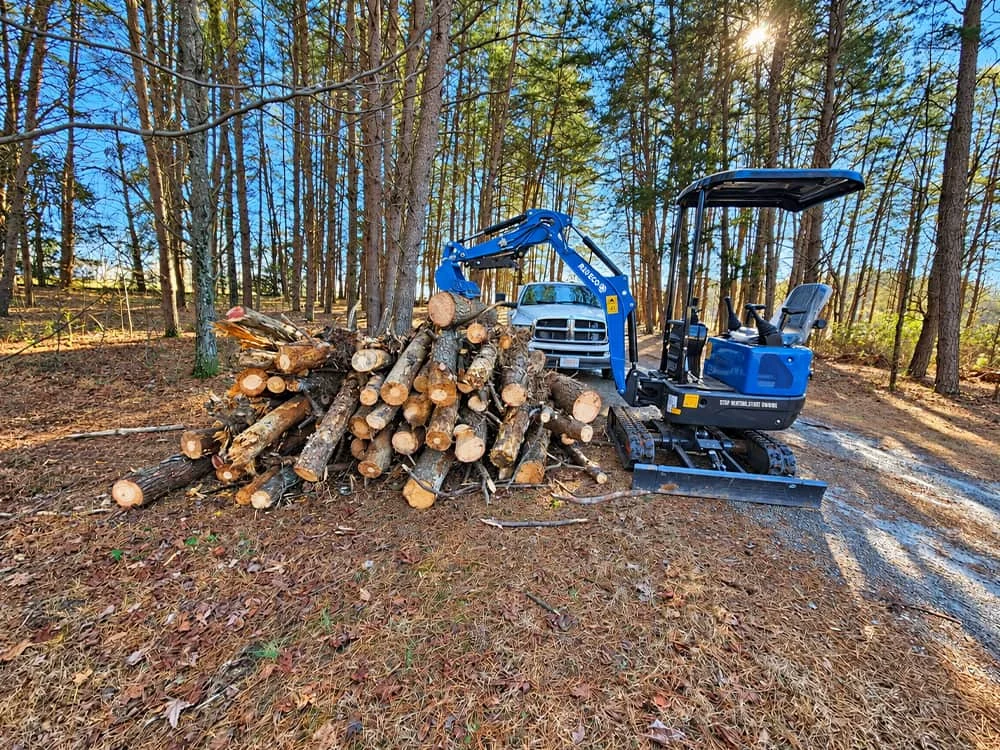
Exposing the root system is essential because buried roots often prevent the stump from moving freely.
Position the excavator on stable ground at a safe distance from the stump.
Begin removing soil around the stump perimeter using controlled bucket movements. Work gradually rather than digging deeply in one location.
Avoid undermining the machine’s tracks or destabilizing nearby structures.
For operators evaluating a small excavator for sale, compact dimensions may be useful in gardens and other locations with restricted access.
Continue removing soil until the major lateral roots become visible.
Use careful bucket movements near suspected roots, buried utilities, or obstacles. Hand tools may be required in areas where machine excavation could cause damage.
Keep excavated soil away from the working edge to reduce the risk of collapse or material falling back into the excavation.
Excavate enough surrounding soil to access the primary roots and identify their connections to the stump.
The necessary excavation depends on root depth, soil conditions, and stump size.
Do not assume that all roots are visible after the first excavation pass. Some roots may extend deeper or farther into the surrounding ground.
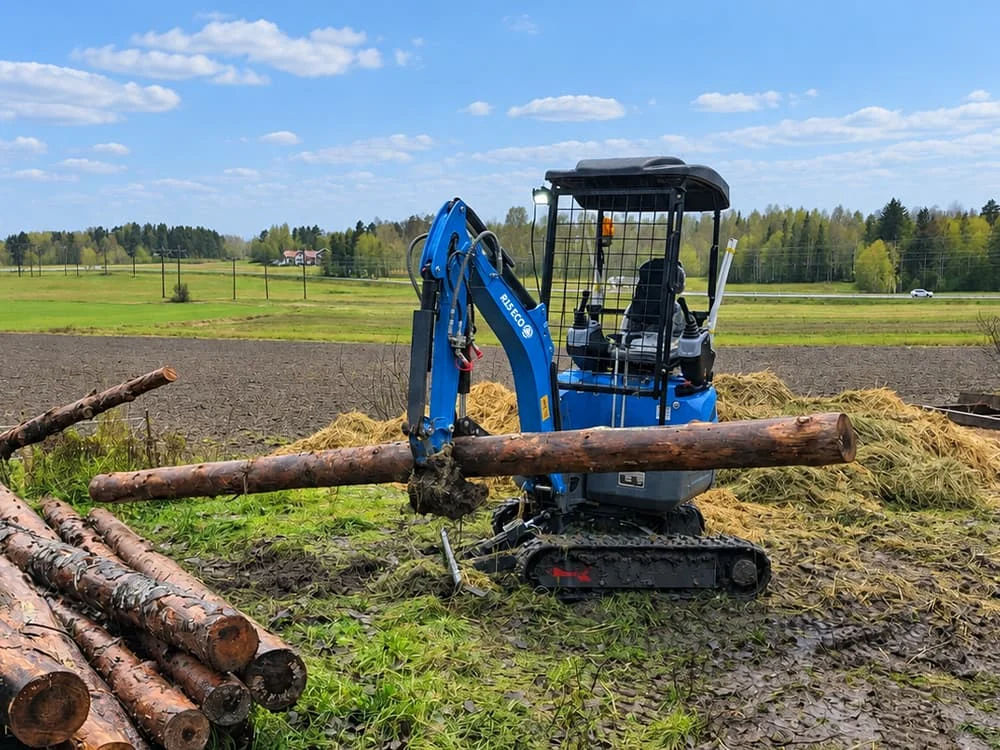
After exposing the main roots, operators must separate enough of the root system to release the stump.
Different mini excavator accessories may support stump removal, depending on machine compatibility and the task.
A standard digging bucket can remove surrounding soil and expose roots. Suitable purpose-built cutting attachments may help separate roots when approved by the equipment and attachment manufacturers.
Do not use bucket teeth as an improvised chopping tool or operate attachments beyond their intended applications.
Identify accessible roots and determine which ones are still anchoring the stump.
Use appropriate cutting equipment to separate them, following the tool manufacturer’s safety instructions.
Work systematically around the stump instead of applying excessive force to a single connection.
Avoid damaging hydraulic lines, underground infrastructure, or nearby vegetation that must remain in place.
After cutting accessible roots, carefully assess whether the stump remains firmly anchored.
If the stump does not move under controlled, permitted forces, stop and inspect for additional roots.
Continue exposing and separating remaining roots rather than attempting to tear the stump free with excessive machine force.
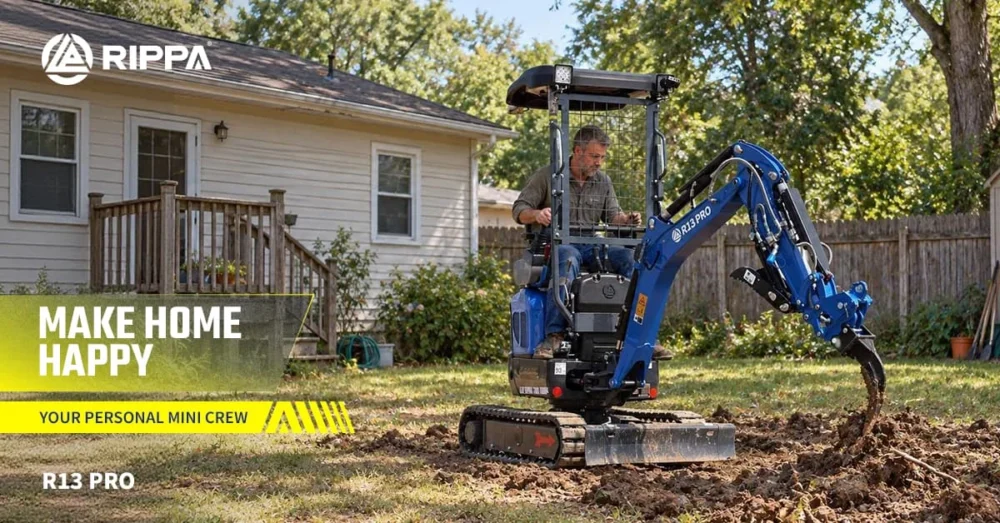
Once the major roots have been separated, the next step is to determine whether the stump can be removed safely.
Remove remaining soil around the root ball and inspect for concealed roots.
Carefully check whether the stump is sufficiently detached without using abrupt or uncontrolled bucket movements.
Avoid excessive pulling, twisting, or side-loading that could damage the machine or cause instability.
A stump and attached root ball may be considerably heavier than expected, especially when soil and moisture remain attached.
Operators should not estimate lifting capacity from machine size alone.
For buyers comparing compact excavators for sale, manufacturer-approved lifting capacity, operating configuration, and stability requirements are important considerations.
If the stump exceeds the equipment’s permitted handling capability, use another suitable removal method.
Only lift a stump when the machine is approved and properly equipped for the lifting operation, with suitable rated lifting points and rigging.
Follow the manufacturer’s lifting instructions and maintain a clear exclusion zone.
Never use an unsupported bucket-tooth connection or allow anyone beneath a suspended load.
Move the stump to a designated disposal area using a safe, controlled method. Where lifting is unsuitable, alternative professional equipment may be required.
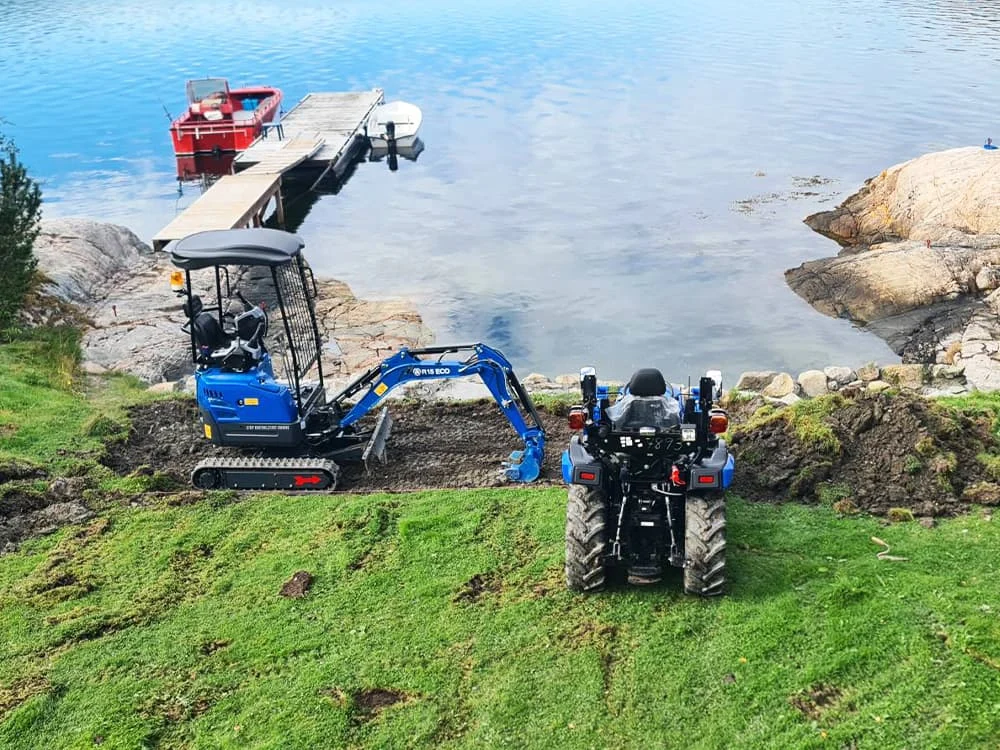
After removing the stump, restore the excavation and check the machine for damage caused during operation.
Inspect the excavated area for loose roots, wood fragments, and unwanted debris.
Remove materials that could interfere with the intended future use of the site.
Keep the work area clear of personnel while machinery is operating.
Use suitable fill material and place it in appropriate layers.
Compact the material according to the site’s requirements to reduce future settlement.
For areas intended to support structures, paving, or significant loads, follow the applicable engineering and site preparation requirements.
Check accessible mini excavator parts, including bucket teeth, pins, bushings, tracks, and hydraulic connections.
Remove accumulated soil and debris from the undercarriage and attachment areas using the manufacturer’s recommended procedures.
Regular mini excavator maintenance helps operators identify wear, leakage, and damaged components before the next job.
Tree stump removal demonstrates how compact excavation equipment can support landscaping and land preparation work.
For international machinery dealers, understanding these applications helps identify customer requirements and recommend suitable equipment for local markets.
RIPPA welcomes international partners interested in mini escavatore sourcing and long-term distribution cooperation. Dealers can explore RIPPA distributor opportunities to discuss equipment supply and potential dealership partnerships.
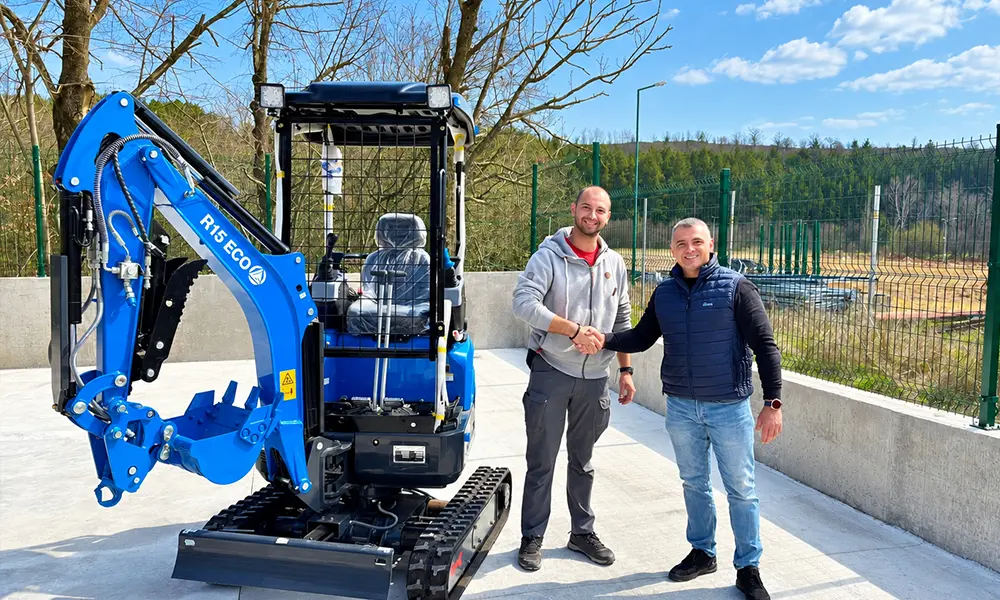
It depends on stump size, root structure, ground conditions, and machine capabilities. Large stumps may require specialized equipment.
Digging buckets help expose roots, while compatible, manufacturer-approved cutting attachments may assist with root separation.
Dig until the major anchoring roots are accessible. The required depth varies with tree species, root structure, and soil conditions.
Tel: +8615628788742
E-mail: contact02@rippa.com
WhatsApp: Escavatore Rippa
Indirizzo: Il sesto parco industriale, città di Jining, provincia di Shandong, Cina

 IT
 EN
 ES
 FR
 RU
 DE
 PT
 TR
 BG
 HR
 RO
 CS
 NN
 SL
 SV
 HU
 SK
 DA
 FI
 PL
 PT_BR

