Choosing a Chinese mini excavator manufacturer is an important decision for equipment dealers, importers, and machinery distributors. The manufacturer you select can influence product consistency, purchasing costs, delivery coordination, and the quality of support available to your business.
China has many companies offering compact excavators for international markets. However, their product ranges, manufacturing arrangements, component selections, and export capabilities can differ significantly.
Rather than selecting a manufacturer based on price alone, buyers should compare several practical factors before placing an order.
Start by identifying the manufacturer’s main equipment categories.
Some companies focus primarily on compact and mini excavators, while others offer a wider range of construction machinery.
For mini excavator buyers, relevant product categories may include:
A manufacturer with a clearly organized product range can make it easier for dealers to compare models and select equipment for different customer groups.
Ask whether the company has experience producing the specific machine types you intend to purchase.
A broad catalog is useful, but actual product knowledge and manufacturing experience are more important than the number of listed models.
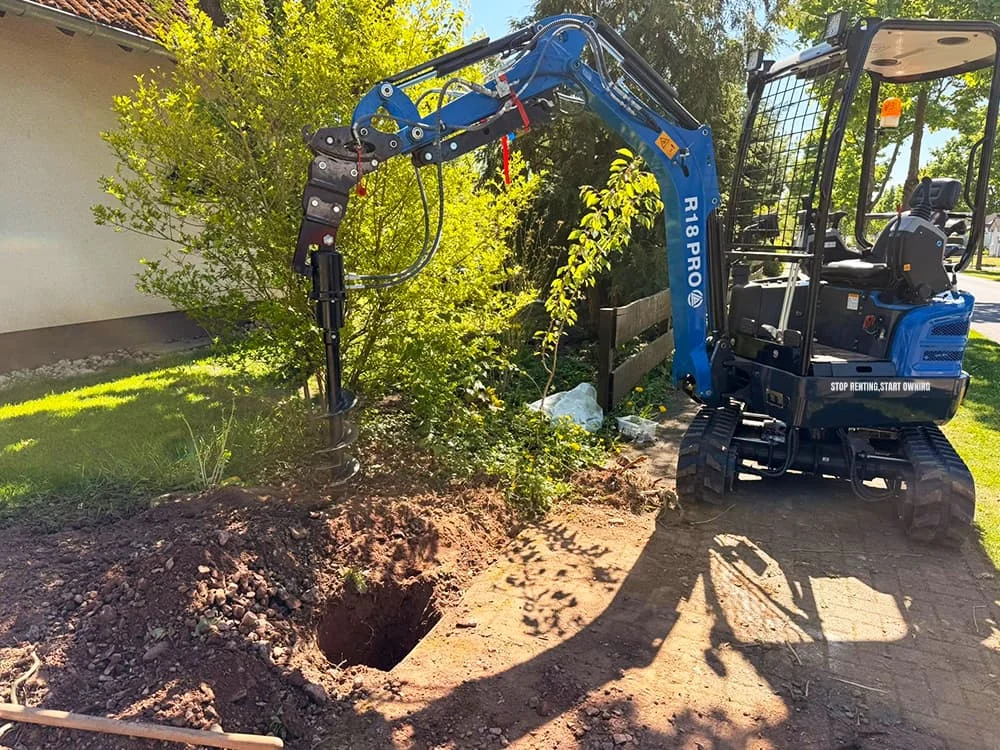
If a supplier identifies itself as a manufacturer, buyers should understand its actual production arrangements.
Request information about the production facility, assembly processes, component sourcing, inspection procedures, and production planning.
Useful questions include:
Where possible, arrange a factory visit or live video inspection.
For international buyers who cannot visit in person, request current production photographs, videos, and supporting business information.
The purpose is to understand the manufacturer’s real capabilities rather than relying entirely on promotional descriptions.
Two Chinese mini excavators may look similar but have different configurations.
Dealers should compare the specifications of each machine carefully.
Important details include:
| Comparison area | Information to verify |
|---|---|
| Machine size | Operating weight and dimensions |
| Working range | Digging depth and operating range |
| Engine | Brand, model, and available options |
| Hydraulic system | Configuration and component information |
| Undercarriage | Track type and design |
| Operator environment | Cab or canopy options |
| Attachments | Compatible tools and mounting arrangements |
Request official product specifications rather than relying on short product descriptions.
Also confirm which configurations are standard and which require additional payment.
This is particularly important when comparing quotations from multiple manufacturers.
A manufacturer’s quality control process can affect machine consistency and the experience of future customers.
Ask how the company manages quality during different production stages.
Areas worth reviewing include:
If the manufacturer provides inspection reports or testing records, review them against the actual product configuration.
For dealers planning repeated purchases, consistency between orders should also be discussed.
The goal is to establish clear product requirements and understand how the manufacturer maintains them.
A mini excavator manufacturer serving international markets should be familiar with export order coordination.
However, export experience should be evaluated through actual documentation and communication, not simply a list of destination countries.
Ask the manufacturer about:
Import requirements vary between countries. Buyers should independently verify the applicable regulations and confirm whether the equipment meets their market’s requirements.
A manufacturer that communicates clearly about documentation and shipping responsibilities can make international purchasing easier to manage.
For equipment distributors, a manufacturer’s responsibility should not end when the machine leaves the factory.
Before establishing a partnership, discuss how the supplier supports overseas dealers.
Important subjects include:
Spare parts: Confirm how parts are identified, ordered, priced, and shipped.
Technical information: Ask whether manuals, parts diagrams, and troubleshooting information are available.
Warranty: Request written terms covering the applicable period, exclusions, claim requirements, and responsibilities.
Communication: Understand how dealers can report product issues and receive technical responses.
Commercial cooperation: Discuss order planning, product information, sales materials, and potential dealer arrangements.
Clear expectations help both sides manage long-term cooperation.
The most effective way to compare Chinese mini excavator manufacturers is to use a consistent evaluation framework.
A simple comparison table can help:
| Evaluation factor | Questions to ask |
|---|---|
| Product range | Does it offer the machines your market needs? |
| Manufacturing | Can it demonstrate its production arrangements? |
| Configuration | Are product specifications clearly documented? |
| Quality control | Are inspection procedures explained? |
| Export experience | Can it coordinate international orders? |
| Commercial terms | Are quotations and payment conditions transparent? |
| Parts support | Are spare parts and technical information available? |
| Dealer cooperation | Are long-term cooperation terms clearly defined? |
Avoid choosing a manufacturer based on one strong factor while ignoring other important requirements.
A slightly different purchase price may be less important than consistent configurations, clear communication, and dependable parts arrangements.
Review its company background, production facility, product documentation, manufacturing arrangements, and export experience. Request verifiable information and arrange a factory visit or live video inspection when practical.
A manufacturer produces the equipment, while a supplier may manufacture, source, distribute, or export it. Buyers should confirm the company’s actual role and responsibilities.
Compare product configurations, manufacturing capability, quality control, export documentation, quotation details, spare parts arrangements, warranty conditions, and dealer support.
Not necessarily. Where practical, begin with an order that allows you to evaluate product quality, communication, delivery coordination, and documentation before expanding the partnership.
Comparing Chinese mini excavator manufacturers requires more than checking product prices and catalogs. Dealers should evaluate manufacturing arrangements, product consistency, export experience, commercial terms, and after-sales support.
A careful selection process helps importers identify suitable manufacturing partners and build a stronger foundation for their mini excavator distribution business.
Tel: +8615628788742
E-pošta: contact02@rippa.com
WhatsApp: Rippa Excavator
Adresa: Šesti industrijski park, grad Jining, pokrajina Shandong, Kina

 HR
 EN
 ES
 IT
 FR
 RU
 DE
 PT
 TR
 BG
 RO
 CS
 NN
 SL
 SV
 HU
 SK
 DA
 FI
 PL
 PT_BR

