Retaining walls are commonly used in landscaping, residential construction, agricultural projects, and property development. They help manage changes in ground elevation, support soil, and create more usable outdoor spaces.
For contractors comparing mini excavators for sale, compact equipment can assist with several retaining wall construction tasks, including site preparation, foundation excavation, material handling, drainage installation, and backfilling.
However, successful construction requires more than excavation. Foundation dimensions, wall design, drainage arrangements, and backfill specifications must follow the approved engineering plan. Understanding how to use a mini excavator throughout the process helps contractors improve working efficiency and prepare the site properly.
A retaining wall project generally involves five main stages: site preparation, foundation excavation, wall block placement, drainage installation, and backfilling.
Start by identifying the wall location, required height, length, and changes in ground elevation.
Review the approved construction drawings and mark the foundation boundaries. Check underground utilities, nearby structures, property boundaries, and access routes before excavation.
The wall design should account for soil conditions, groundwater, drainage, and loads behind the wall.
Remove vegetation, loose soil, and unwanted materials from the planned construction area.
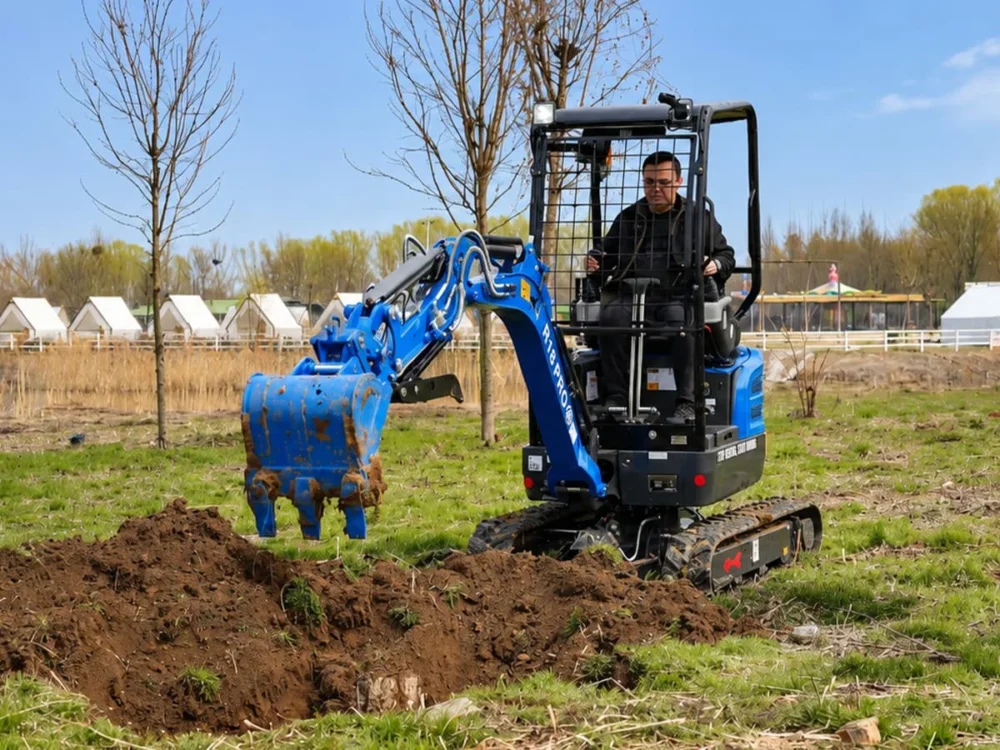
A mini excavator can help clear the site and move excavated soil to a designated location.
Excavate the foundation according to the specified dimensions. Prepare the base material and verify its condition before wall installation.
Position the retaining wall units according to the approved layout. Install the specified drainage materials and pipes behind the wall.
Place suitable backfill in layers and compact it according to the project specifications. Restore the surrounding ground and check the finished work.
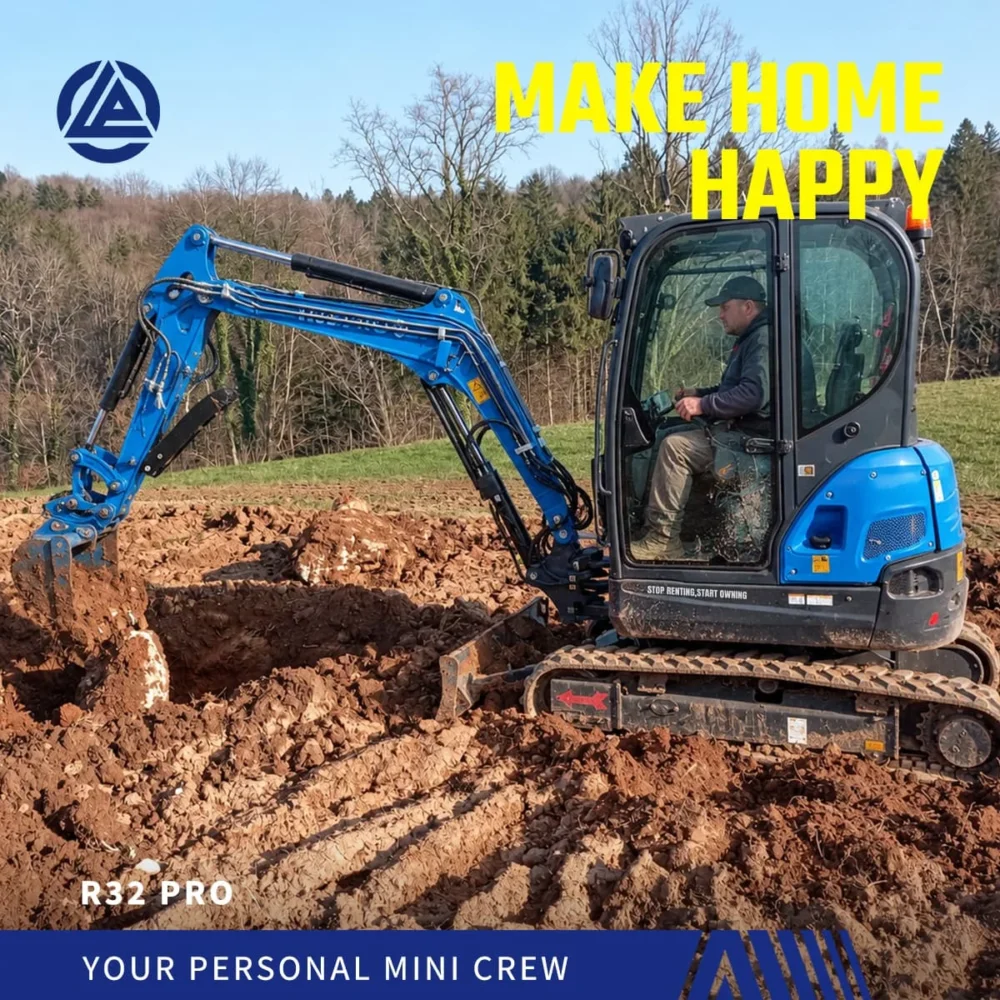
Foundation preparation is one of the most important stages of retaining wall construction. An unsuitable foundation can contribute to uneven settlement, wall movement, and structural problems.
Use the construction drawings to establish the foundation alignment, width, and excavation depth.
Mark the excavation boundaries clearly so operators can maintain the required dimensions throughout the work.
Use the excavator bucket to remove vegetation, loose soil, and unsuitable material.
Work gradually and avoid disturbing soil outside the designated foundation area.
When evaluating a mini excavator for sale, contractors should consider digging depth, working range, machine width, and stability in relation to the project.
Excavate to the specified depth and remove loose material from the bottom.
Depending on the wall design, the foundation may require a compacted aggregate base or another engineered preparation method.
Check the foundation elevation and surface condition before proceeding. Any soft or unsuitable ground should be addressed according to the project engineer’s instructions.
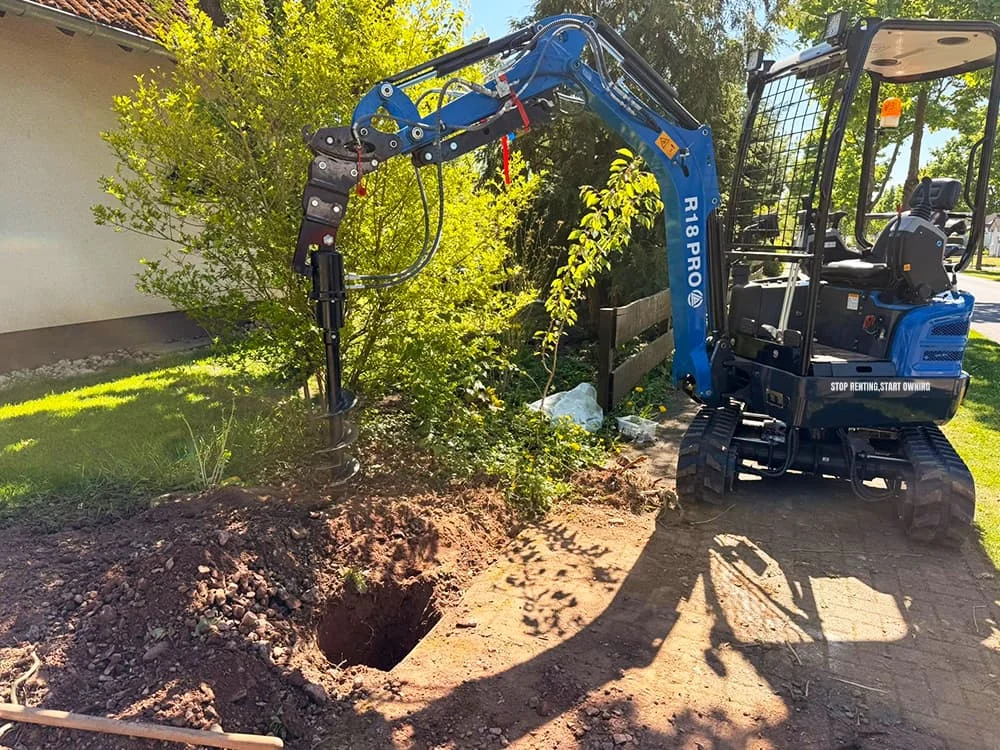
Moving and positioning retaining wall blocks requires careful equipment selection and controlled operation.
Different mini excavator accessories support different construction tasks.
General-purpose buckets can assist with soil removal and site preparation, while compatible lifting attachments may be used for approved material handling applications.
The attachment must be compatible with the machine and rated for the intended load.
Before handling retaining wall blocks, confirm their weight and dimensions.
Compare the load with the manufacturer’s lifting capacity chart for the actual machine configuration, working radius, and lifting position.
Do not assume that a compact excavator can lift every retaining wall block. Heavy or oversized units may require a dedicated lifting machine.
Place wall blocks according to the approved installation pattern.
Check alignment, elevation, and positioning as each section is installed. Use suitable lifting points, rated rigging, and approved procedures where lifting is required.
Keep workers outside the suspended-load area. Never lift blocks using bucket teeth or improvised attachment points.
Check the wall line and level regularly throughout installation.
Correct positioning during each stage helps reduce alignment problems and unnecessary adjustments later.
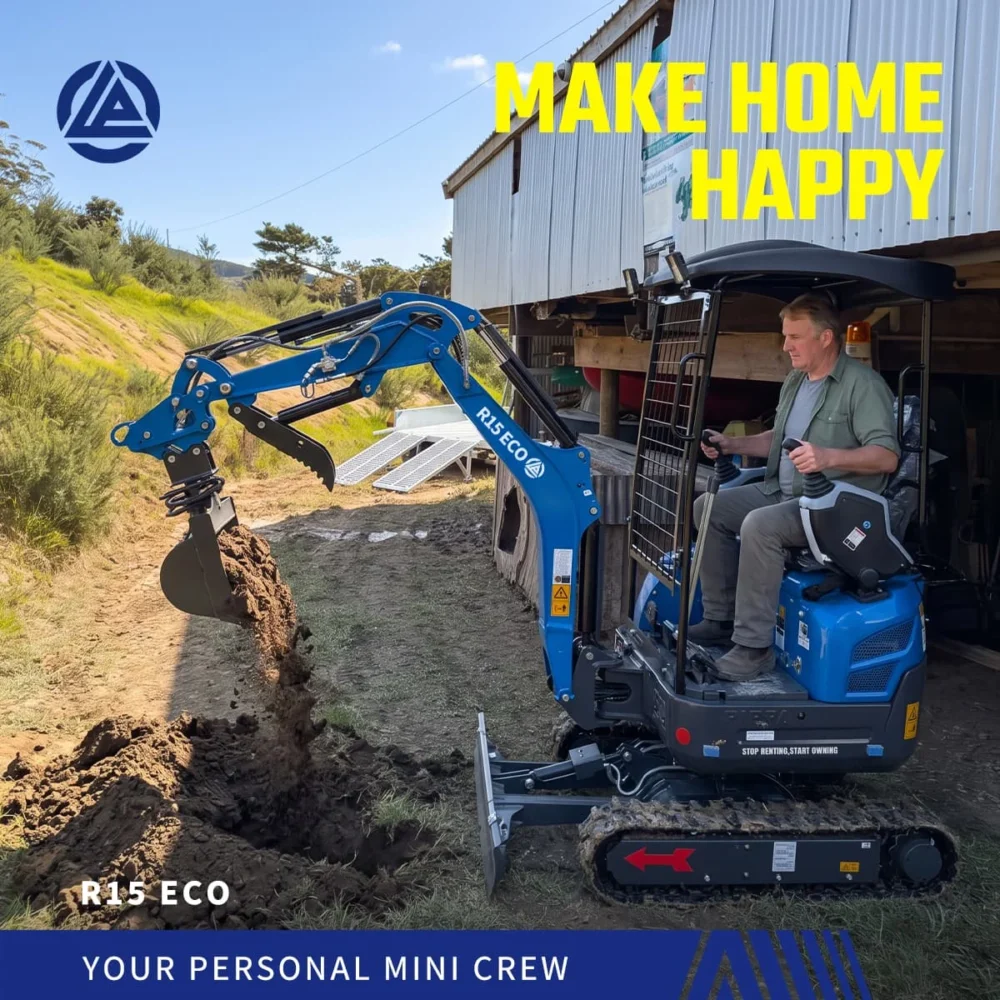
Proper drainage and backfilling are essential because water pressure and poorly compacted soil can affect retaining wall performance.
Follow the approved drainage design to position drainage pipes and outlets behind the wall.
A specified drainage aggregate layer may be placed behind the wall to help water move toward the drainage system.
Where required, use suitable filter fabric to reduce soil migration into the drainage material.
Use a small excavator for sale for suitable soil placement and material handling tasks where the machine has sufficient working capacity.
Place approved backfill materials in controlled layers rather than filling the entire space at once.
Avoid pushing excessive material directly against an unsupported wall.
Use suitable compaction equipment according to the project specifications.
The required compaction method and layer thickness depend on the backfill material, wall design, and site conditions.
Maintain the specified drainage arrangement and avoid damaging pipes or filter materials during backfilling.
After backfilling, shape the surrounding ground according to the site plan.
When comparing compact excavators for sale, contractors should consider machine access, working range, ground pressure, and the ability to operate around completed wall sections.
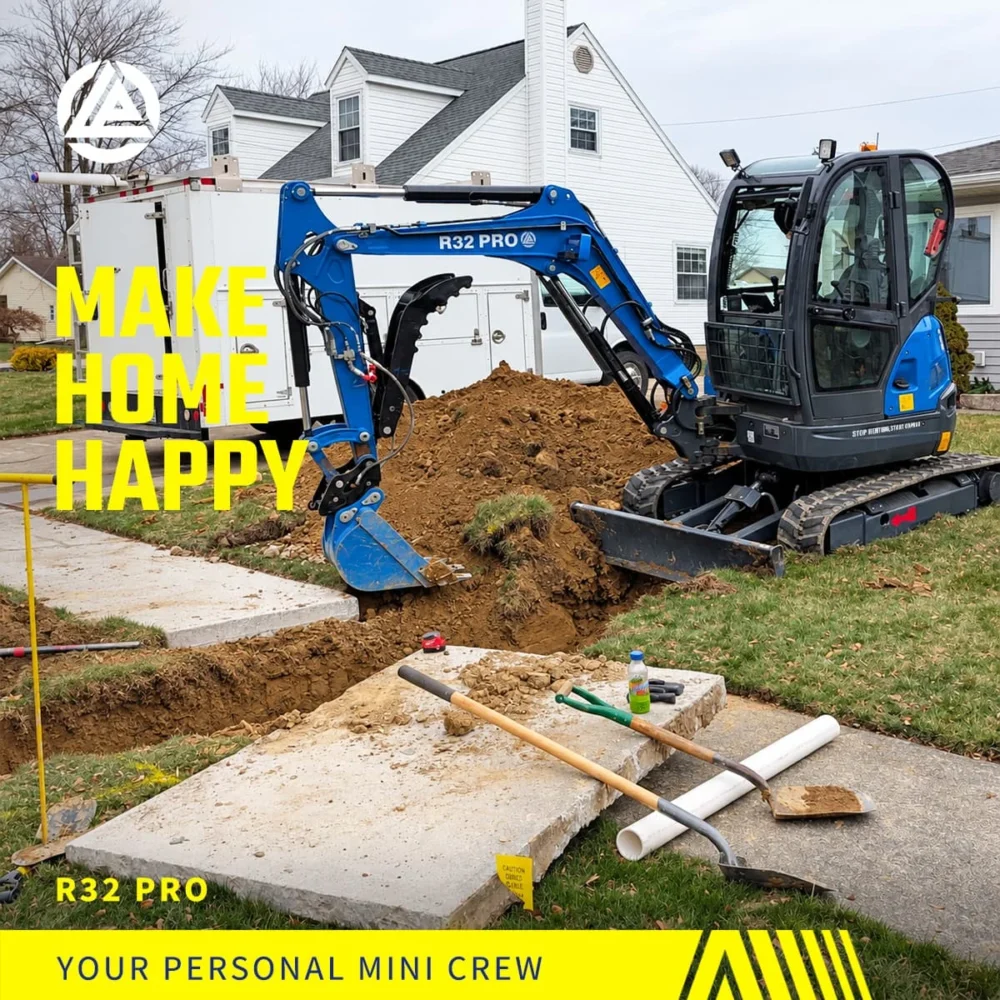
Foundation excavation and material handling expose equipment to soil, aggregate, stones, and abrasive materials. Post-operation inspection helps identify wear and damage before the next project.
Check essential mini excavator parts, including:
Look for loose connections, visible damage, and abnormal wear.
Remove accumulated soil and stones from the bucket, tracks, and undercarriage.
Pay attention to areas where compacted soil or aggregate may interfere with component movement.
A consistent mini excavator maintenance routine should include lubrication, fluid checks, track inspection, and hydraulic system monitoring.
Use a mini excavator inspection checklist to record equipment condition and identify maintenance requirements.
Follow the manufacturer’s maintenance recommendations, especially after working in abrasive soil or handling heavy construction materials.
Retaining wall construction demonstrates how mini excavators can support foundation preparation, material handling, drainage work, and landscaping projects.
For international machinery dealers, understanding these applications helps identify customer requirements and recommend suitable equipment and attachments.
RIPPA welcomes international distribution partners interested in mini excavator sourcing and long-term cooperation. Explore RIPPA distributor opportunities to discuss equipment supply and potential dealership partnerships.
Yes. They can assist with foundation excavation, site preparation, material handling, and backfilling when the work is within their operating capabilities.
A general-purpose bucket is suitable for many foundation excavation tasks. Bucket width should match the excavation dimensions and soil conditions.
Proper drainage helps reduce water accumulation and hydrostatic pressure behind the wall, supporting long-term wall performance.
Puh: +8615628788742
Sähköposti: contact02@rippa.com
WhatsApp: Rippa kaivinkone
Osoite: Kuudes teollisuuspuisto, Jiningin kaupunki, Shandongin maakunta, Kiina.

 FI
 EN
 ES
 IT
 FR
 RU
 DE
 PT
 TR
 BG
 HR
 RO
 CS
 NN
 SL
 SV
 HU
 SK
 DA
 PL
 PT_BR

