The mini excavator market in 2026 presents different opportunities across construction, landscaping, agriculture, infrastructure maintenance, and other compact equipment applications. For equipment dealers and importers, understanding these changes is important when selecting products, evaluating suppliers, and planning inventory.
However, market demand does not move in the same direction in every country or product category. A successful purchasing strategy requires more than following general industry forecasts. Dealers should understand local customer requirements, machine configurations, and the factors influencing equipment purchasing decisions.
Mini excavators are widely used where conventional excavators may be difficult to operate because of limited working space, access restrictions, or project requirements.
Their applications include:
These applications give compact excavators access to different customer groups. Instead of relying on one construction segment, manufacturers and dealers can serve contractors, property service companies, agricultural businesses, and equipment distributors.
For overseas importers, this makes it important to understand which applications are most common in the target market before deciding which machine categories to stock.
Industry data provides useful information, but buyers should pay attention to the reporting period and measurement method.
For example, Equipment World’s analysis of U.S. equipment financing records reported approximately 32,500 new financed mini excavator sales between June 2025 and May 2026, representing a 7.7% year-over-year decrease.
Meanwhile, Hitachi Construction Machinery’s North American market update for July to September 2026 reported a 1% year-over-year increase in mini excavator demand.
These figures use different data sources and measurement approaches, so they should not be treated as directly comparable. They do show why dealers need to examine market conditions over multiple reporting periods rather than rely on one headline figure.
For an importer, the practical lesson is to monitor local equipment demand, customer inquiries, dealer sales activity, and financing conditions together.
The mini excavator market is not a single product category with identical customer expectations. Buyers select machines according to their working environment and project requirements.
Small excavators are relevant to residential contractors, landscaping companies, and property maintenance businesses.
These customers may prioritize:
Contractors handling regular construction, trenching, and site preparation may require a different balance of digging capability, operating comfort, transportability, and working reach.
Dealers should compare actual machine configurations rather than assume that machines in the same general weight category offer identical capabilities.
Some customers need compact equipment that can handle more demanding site work while remaining easier to transport than larger conventional excavators.
In this segment, buyers may pay closer attention to operating requirements, lifting considerations, hydraulic configuration, and the intended working environment.
Understanding customer applications helps dealers identify which products are relevant to their local markets.
Landscaping businesses use compact excavators for soil preparation, planting areas, small excavation projects, and property improvements.
Contractors may use mini excavators for foundation preparation, trenching, drainage work, and other localized construction tasks.
Agricultural customers may need compact equipment for drainage channels, small earthmoving projects, and maintenance around farm buildings.
Smaller machines can be useful for selected maintenance projects where access and working space are limited.
For dealers, these applications provide different opportunities to reach customers. The best product range depends on which industries are active in the local market.
Several factors deserve attention when evaluating the compact excavator market.
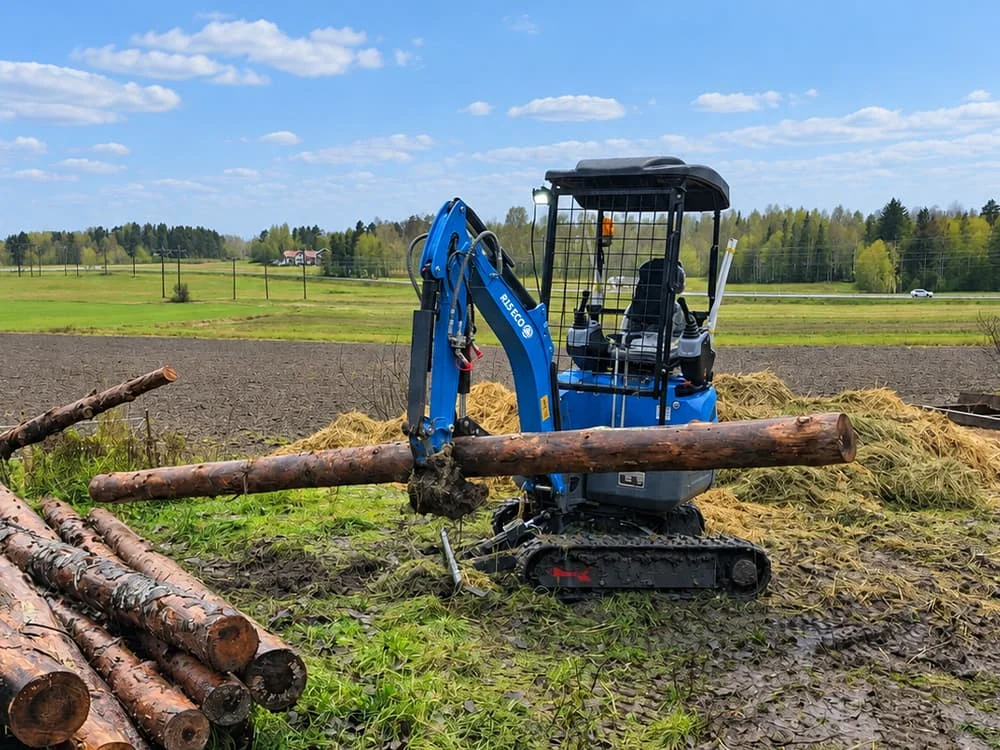
Customers increasingly consider what work a machine can perform beyond basic digging. Buckets and other compatible attachments can influence purchasing decisions.
Dealers should verify attachment compatibility with the exact machine configuration before promoting a particular combination.
Operating comfort, visibility, control layout, and access to the operator area can influence customer preferences, particularly among contractors using equipment regularly.
Different markets have different requirements concerning engines, emissions regulations, and operating conditions. Importers should confirm which configurations are suitable for their destination market.
Machine dimensions, transportation arrangements, and access restrictions can affect purchasing decisions. Dealers should understand the typical jobsite conditions of their customers.
Product consistency, clear documentation, parts identification, and communication are important when building a long-term equipment distribution business.
These factors should be evaluated together rather than treated as isolated selling points.
A dealer entering or expanding in the mini excavator market should begin with local demand research.
A practical approach includes:
Avoid ordering machines simply because a particular category is popular in another country. Differences in regulations, site conditions, transportation, and customer budgets can produce very different purchasing preferences.
A reliable manufacturer should provide clear product information and help buyers understand the available configurations.
Before establishing a purchasing relationship, importers should review:
For larger orders, buyers should confirm the configuration of each machine in writing. This helps avoid differences between the agreed quotation and the equipment received.
RIPPA offers a range of mini excavators for different working applications. Overseas dealers can review the available models and identify suitable options according to their target customers.
Demand is influenced by construction activity, landscaping, infrastructure maintenance, agricultural applications, transportation requirements, and the need for compact equipment in restricted working areas.
Market performance varies by country, reporting period, and measurement method. Buyers should review regional industry data instead of assuming that one market trend represents global demand.
The choice depends on local customer applications, site conditions, transportation requirements, and purchasing preferences. Dealers should research their target market before selecting models.
Important considerations include model availability, configuration information, product documentation, attachment compatibility, applicable compliance requirements, parts information, and shipping arrangements.
Different regions have different construction industries, regulations, customer budgets, and operating conditions. Local research helps dealers choose equipment that meets actual purchasing needs.
The mini excavator market in 2026 offers opportunities across several industries, but successful equipment purchasing depends on understanding local demand rather than following general market predictions.
For importers and dealers, the priority should be identifying suitable customer applications, comparing machine configurations, and working with manufacturers that provide clear product information.
RIPPA welcomes inquiries from overseas equipment distributors, importers, and business buyers interested in its mini excavator range.
Contact RIPPA to discuss available mini excavator models and wholesale purchasing opportunities.
Tel: +8615628788742
Email: contact02@rippa.com
WhatsApp: Rippa Excavator
Adresa: Al șaselea parc industrial, orașul Jining, provincia Shandong, China

 RO
 EN
 ES
 IT
 FR
 RU
 DE
 PT
 TR
 BG
 HR
 CS
 NN
 SL
 SV
 HU
 SK
 DA
 FI
 PL
 PT_BR

