A mini excavator dealer network connects equipment manufacturers with customers in local and regional markets. Instead of relying entirely on direct factory sales, manufacturers can work with dealers that understand local customers, construction applications and equipment demand.
For contractors and equipment buyers, a dealer network can make it easier to find machines, obtain parts and receive local assistance. For equipment businesses, joining a dealer network can create an additional product category and a direct relationship with a construction machinery manufacturer.
A mini excavator dealer network is a group of authorized or approved dealers and distributors that represent a manufacturer’s equipment in different markets.
The basic structure is:
Manufacturer → Dealer or Distributor → Local Customer
Depending on the market, there may also be a regional distributor supplying several smaller dealers.
The dealer normally handles local customer relationships, sales and market development, while the manufacturer provides equipment, product information and factory-level support.
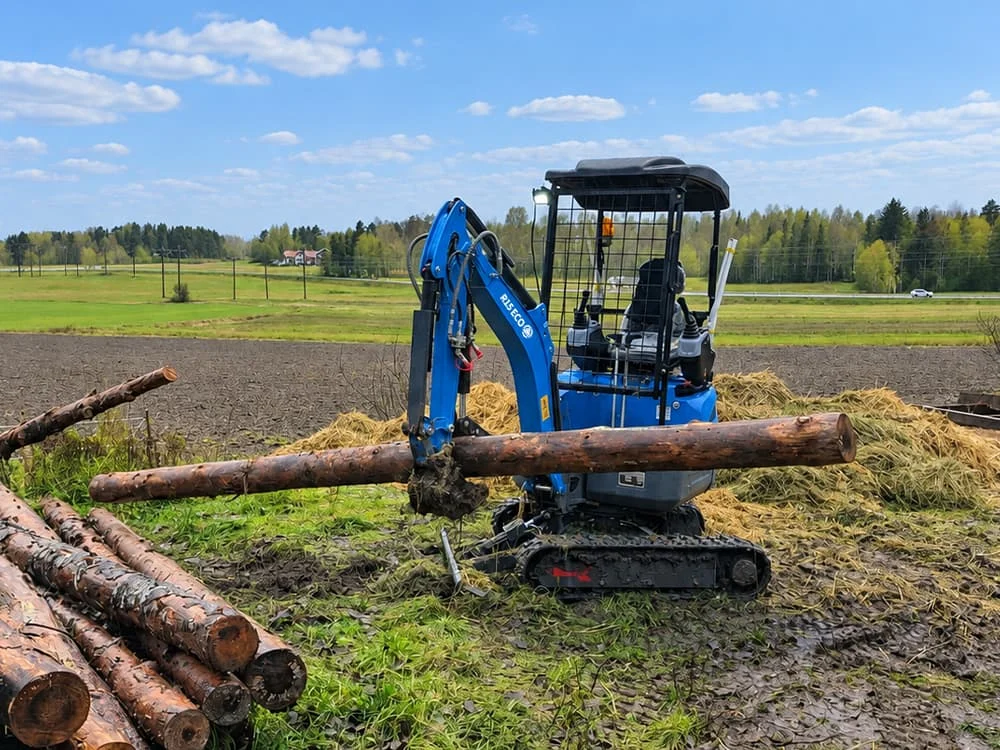
A manufacturer may have strong production capabilities but limited knowledge of every local market.
Dealers provide several important functions.
A dealer understands the applications and buying habits of customers in its territory.
For example, the demand for compact excavators can vary between:
A local dealer can communicate these market requirements directly to the manufacturer.
Customers often prefer to communicate with a nearby equipment supplier, particularly when purchasing machinery that requires transportation, maintenance and parts.
A dealer provides a local point of contact between the manufacturer and end user.
Equipment support is another important part of a dealer network.
Customers may need filters, hydraulic components, electrical parts, attachments and other replacement components throughout the machine’s operating life.
A well-organized dealer network creates a defined route for customers to obtain these resources.
A dealer network can include different levels of support.
Dealers need to understand the equipment they sell.
Training may cover:
This allows sales teams to answer customer questions more accurately.
Manufacturers can support dealers with:
These resources reduce the amount of content a dealer has to create independently.
When a local technician encounters an unfamiliar issue, communication with the manufacturer can help identify the appropriate solution.
A defined technical-support process is particularly useful for new dealers.
The dealer network should have a clear process for ordering replacement parts.
Manufacturers may supply dealers directly from the factory or through regional warehouses.
RIPPA’s published dealer program describes overseas warehouse resources, parts support and technical training as components of its international dealer model.
For an equipment business, a direct manufacturer relationship can simplify communication.
Instead of contacting multiple intermediaries, the dealer has a defined supplier relationship for:
It can also make it easier to expand the product portfolio.
A business that starts by selling mini excavators may later add other compact construction equipment based on customer demand.
These two business models are not necessarily the same.
An independent reseller may purchase equipment from various suppliers and sell it under its own commercial operation.
A dealer normally has a more defined relationship with a manufacturer or brand.
This can provide clearer access to:
However, the exact rights and responsibilities depend on the agreement between the manufacturer and dealer.
Potential dealers should always review the commercial terms before representing a brand.
Equipment businesses should investigate the manufacturer before committing to a dealership.
Check whether the company has its own production facilities and how its equipment is manufactured.
A manufacturer with several equipment categories may provide more opportunities for future product expansion.
International distribution requires experience with shipping, documentation, communication and market requirements.
Ask what resources are available for sales, service, marketing and parts.
Understand how the manufacturer manages other dealers, distributors, direct sales and online inquiries.
This is particularly important when developing a territory.
Joining a dealer network does not automatically create sales.
Dealers still need to build local demand.
Digital search is one important channel.
Potential customers may search for:
A dealer can create local landing pages and product content around these searches.
The goal is to answer the customer’s question while providing a clear path to contact the local dealer.
A strong dealer network can also create a lead-sharing system.
For example:
Customer searches online → Manufacturer receives inquiry → Location is identified → Local dealer receives lead → Dealer contacts customer
This approach allows a manufacturer to generate international demand while allowing dealers to handle local sales.
The same structure can work in reverse:
Local dealer generates inquiry → Dealer contacts manufacturer → Manufacturer provides technical or product support
The result is a two-way relationship rather than a simple supplier transaction.
Before joining a network, ask:
These questions help clarify how the partnership will operate before investment begins.
It is a group of dealers or distributors that sell and support a manufacturer’s mini excavators in different geographic markets.
They connect manufacturers with local customers and can provide local sales, parts and service support.
Potentially, yes. Manufacturers may consider equipment businesses based on their market knowledge, sales capability, facilities, customer base and service resources.
Inventory requirements vary by manufacturer and market. Some dealer programs provide flexible stocking arrangements.
Consider manufacturer support, product range, parts supply, training, marketing resources, territory policy and lead management.
A mini excavator dealer network creates a connection between factory production and local equipment demand.
For customers, the network can provide a local source for machines, parts and support. For dealers, it can provide access to a manufacturer’s products, technical resources and marketing infrastructure.
The most important step for a potential dealer is to evaluate the complete relationship rather than focusing only on wholesale pricing.
A strong dealer partnership should clearly define products, territory, inventory, leads, parts, technical support and long-term cooperation.
Tel: +8615628788742
Email: contact02@rippa.com
WhatsApp: Rippa Excavator
Adresa: Al șaselea parc industrial, orașul Jining, provincia Shandong, China

 RO
RO  EN
EN  ES
ES  IT
IT  FR
FR  RU
RU  DE
DE  PT
PT  TR
TR  BG
BG  HR
HR  CS
CS  NN
NN  SL
SL  SV
SV  HU
HU  SK
SK  DA
DA  FI
FI  PL
PL  PT_BR
PT_BR 
