Installing underground utilities requires careful planning, accurate excavation, and suitable construction equipment. Water pipelines, drainage systems, electrical conduits, and communication cables often need trenches that follow specific routes and dimensions.
For contractors working in residential areas, commercial developments, and infrastructure projects, a mini excavator can be a practical option when excavation takes place in restricted working spaces.
Compared with larger excavation equipment, compact excavators can be easier to position in locations with limited access. Their suitability, however, depends on trench dimensions, soil conditions, digging requirements, and the surrounding working environment.
Choosing the right mini excavator for utility trenching involves more than comparing machine size. Contractors should evaluate the entire workflow, from underground utility identification to excavation, pipe installation, and backfilling.
Utility trenching often takes place in areas where working space is limited.
Residential properties, narrow construction zones, landscaping projects, and existing infrastructure can restrict the movement of larger equipment.
Mini excavators are commonly considered for these applications because their compact design can help contractors access smaller working areas.
Typical utility trenching applications include:
The appropriate machine depends on the required digging depth, trench width, soil conditions, and available access.
Contractors should confirm that the selected equipment can complete the intended excavation work without exceeding its operating capabilities.
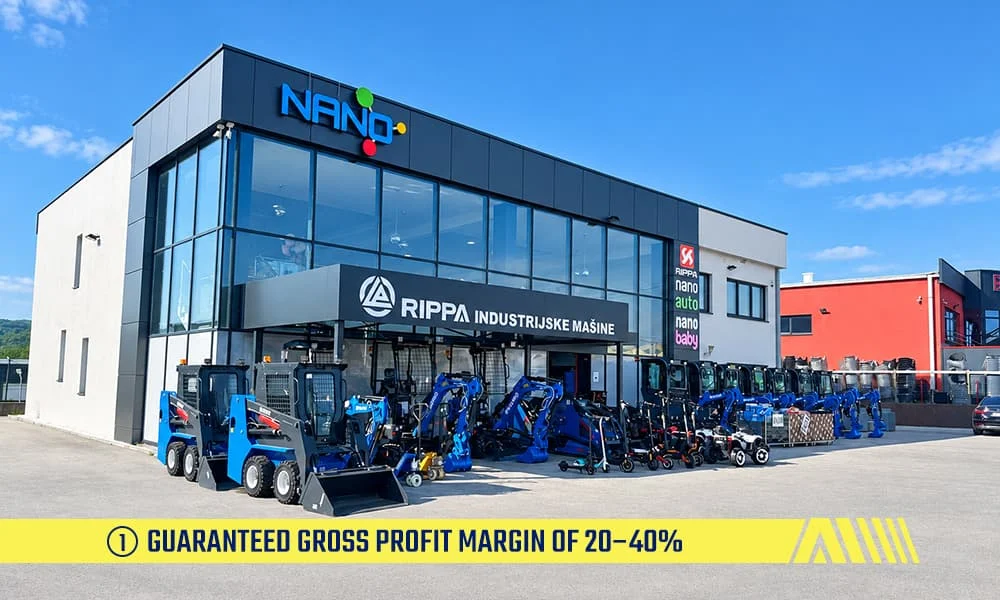
Good preparation helps reduce unnecessary delays and improves jobsite organization.
Before bringing a mini excavator onto a utility project, contractors should evaluate several important factors.
Existing underground infrastructure must be identified before excavation begins.
Water pipes, gas lines, electrical cables, and communication networks may be located near the planned trench route.
Contractors should follow local utility-location procedures and obtain the necessary information before digging.
Excavation should not begin until underground hazards have been properly assessed and the required precautions are in place.
The trench route should be planned according to the utility installation requirements.
Important considerations include:
Clear planning helps operators understand the required excavation area and reduces unnecessary digging.
Residential and urban projects may have narrow entrances, fences, buildings, landscaping, and other obstacles.
Measure the available access width and working area before selecting equipment.
Contractors should also consider where the machine will turn, where excavated soil will be placed, and how materials will reach the trench.
A compact excavator may be useful in restricted locations, but the complete machine dimensions and operating clearances must still be checked.
Different utility projects have different excavation requirements. Buyers should compare machine configurations according to the actual work.
The required trench depth and width should be established before selecting an excavator.
Check the manufacturer’s digging specifications and confirm that the machine can reach the required working depth under the intended conditions.
Do not assume that every compact excavator can handle every trenching application.
Machine dimensions can influence whether equipment can enter a residential property or restricted construction area.
Measure gates, access paths, temporary ramps, and other obstacles.
Also consider the space required for safe operation and material handling.
Bucket selection affects excavation width and the amount of soil removed during each operation.
A suitable bucket should match the trench design and soil characteristics.
Contractors should discuss available bucket options with the supplier and confirm compatibility with the selected machine.
Some utility projects require additional attachments for specific excavation or site preparation tasks.
Before ordering attachments, confirm hydraulic compatibility, connection requirements, and the manufacturer’s approved operating configuration.
Selecting attachments based only on appearance or general product descriptions can create unnecessary problems after delivery.
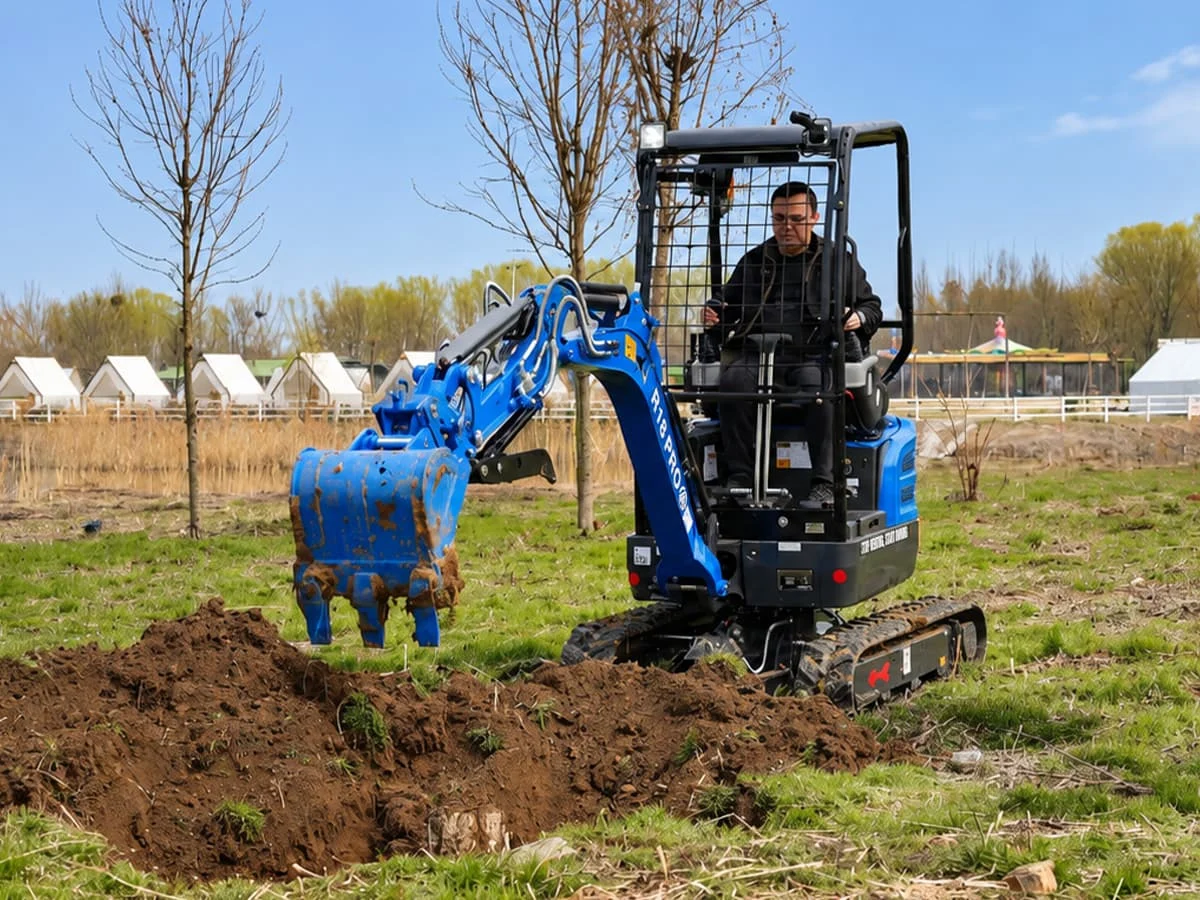
An organized workflow helps coordinate excavation with pipe installation and other construction activities.
Review the trench route, access conditions, ground surface, and underground utility information.
Identify obstacles and determine where the excavated material will be placed.
The operator and site supervisor should understand the planned excavation area before work begins.
Position the machine on suitable, stable ground with adequate working clearance.
Check the surrounding area and ensure that the excavator can operate without interfering with workers, existing structures, or underground infrastructure.
Follow the manufacturer’s operating instructions and site safety procedures.
Excavate along the established trench alignment.
Monitor trench width and depth throughout the operation rather than relying only on visual estimates.
Where underground utilities or changing soil conditions create additional risks, work should follow the project’s approved excavation procedures.
Once the required trench section is prepared and inspected, installation teams can complete the relevant utility work.
Coordination between excavation operators and installation workers helps reduce unnecessary waiting and prevents conflicts between different site activities.
After installation and required inspections, the trench can be backfilled according to the project specifications.
Material placement, compaction, and surface restoration should follow applicable engineering requirements and local regulations.
Even well-planned projects can encounter unexpected conditions.
Understanding common problems helps contractors prepare more effectively.
Soil composition may change along the trench route.
Loose soil, clay, gravel, and wet ground can affect excavation progress and trench stability.
Contractors should evaluate ground conditions and follow appropriate excavation safety requirements.
Buildings, roads, fences, and existing landscaping may limit machine positioning.
In these situations, contractors should evaluate the complete machine dimensions, turning space, and working range before choosing an excavator.
Excavated soil needs a designated storage area.
Placing soil too close to an excavation edge can create additional hazards and interfere with trench work.
Plan spoil placement and material movement before excavation begins.
An excavator that cannot meet the required digging depth or working clearance may slow down the project.
Before purchasing, contractors should compare machine capabilities with actual trench specifications rather than choosing equipment based only on its compact appearance.
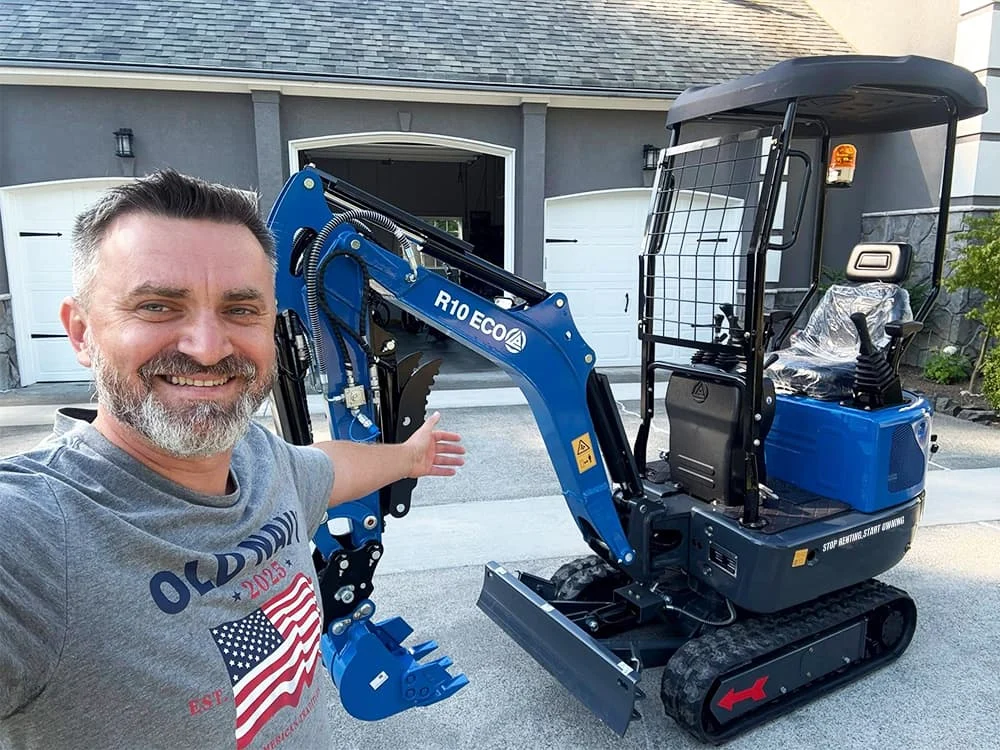
Both compact and larger excavators can be used for utility trenching, but their suitability depends on project requirements.
| Comparison | Mini escavadeira | Larger Excavator |
|---|---|---|
| Working environment | Restricted and smaller sites | Larger construction areas |
| Access | Often easier in confined spaces | Requires more access space |
| Trenching applications | Residential and selected utility projects | Larger excavation and infrastructure projects |
| Site positioning | Compact working footprint | Requires more operating space |
| Equipment selection | Based on compact-site requirements | Based on larger excavation demands |
A mini excavator may be a suitable choice for small-scale utility installations, but larger infrastructure projects may require different equipment.
The final decision should be based on trench dimensions, digging requirements, soil conditions, and project productivity needs.
For overseas contractors and equipment distributors, supplier evaluation is an important part of the purchasing process.
Before placing an order, ask for clear information about:
Dealers should also understand which machine configurations are most relevant to their target customers.
A manufacturer that provides accurate product information makes it easier for distributors to communicate equipment capabilities and support purchasing decisions.
RIPPA Group focuses on construction machinery manufacturing and international supply. Contractors and distributors interested in mini excavators can contact the company to discuss product options and wholesale purchasing requirements.
Yes. Mini excavators are commonly used for residential utility installation, drainage, irrigation, and other projects where excavation takes place in relatively restricted working areas. The selected machine must meet the required digging specifications.
The appropriate machine depends on trench depth, width, soil conditions, site access, and working requirements. Buyers should compare manufacturer specifications with the actual project design.
A bucket that matches the planned trench width and soil conditions is generally the most appropriate choice. Contractors should confirm available bucket configurations and compatibility with the excavator.
Mini excavators are often used in residential construction because their compact dimensions can help them access smaller working areas. However, access width, operating clearance, ground conditions, and local site restrictions must be checked.
Important considerations include digging depth, machine dimensions, bucket options, soil conditions, maintenance requirements, and the availability of replacement parts.
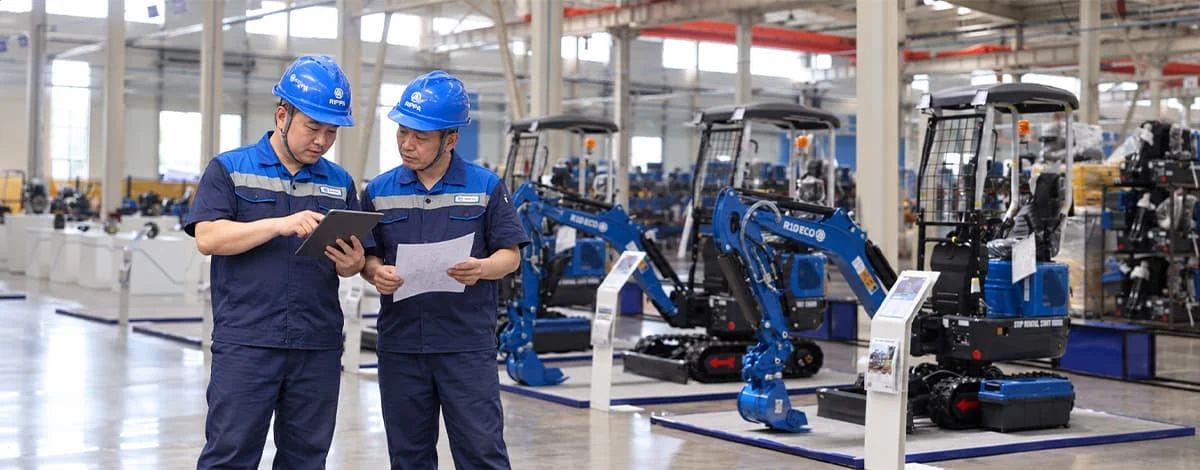
Utility trenching requires suitable equipment, careful site preparation, and an organized construction workflow.
For contractors, selecting a mini excavator should begin with an understanding of trench dimensions, ground conditions, access limitations, and installation requirements.
For equipment distributors, understanding these applications helps identify the right product configurations for local construction customers.
Choosing a manufacturer that provides clear technical documentation and international purchasing support can also make equipment sourcing more straightforward.
Explore RIPPA mini excavator options and contact the team to discuss equipment requirements for your utility and construction projects.
Tel: +8615628788742
E-mail: contact02@rippa.com
WhatsApp: Escavadeira Rippa
Endereço: O sexto parque industrial, cidade de Jining, província de Shandong, China

 PT_BR
 EN
 ES
 IT
 FR
 RU
 DE
 PT
 TR
 BG
 HR
 RO
 CS
 NN
 SL
 SV
 HU
 SK
 DA
 FI
 PL

