Working on slopes presents additional challenges for construction equipment operators. Uneven ground, loose soil, changing gradients, and limited traction can increase the risk of machine instability and rollovers.
For contractors looking for mini excavators for sale, understanding slope safety is essential before selecting equipment or starting excavation work. Proper machine selection, ground assessment, safe operating techniques, and regular maintenance all contribute to safer working conditions.
For machinery dealers and importers, understanding these requirements also helps provide better equipment recommendations and technical support to customers working on challenging terrain.
Operating a mini excavator on sloping ground requires careful attention to several potential hazards. Identifying these risks before work begins helps operators make safer decisions.
Rollovers are among the most serious risks associated with slope operations. Uneven ground, excessive loads, sudden movements, and unsuitable machine positioning can affect stability.
Operators should always follow the manufacturer’s operating limits and avoid working beyond the machine’s approved slope conditions.
Wet grass, loose soil, mud, and gravel can reduce track traction. When the machine loses grip, it may slide downhill or become difficult to control.
Check ground conditions before moving and avoid operating on surfaces that cannot provide adequate support.
Soft soil, hidden voids, erosion, and unsupported excavation edges can cause the ground beneath the machine to collapse.
Never assume that a slope is stable simply because its surface appears firm.
Loose rocks, soil, and debris can move downhill during excavation. Nearby obstacles and overhead hazards can also create additional risks.
Keep the work area clear and establish appropriate exclusion zones.
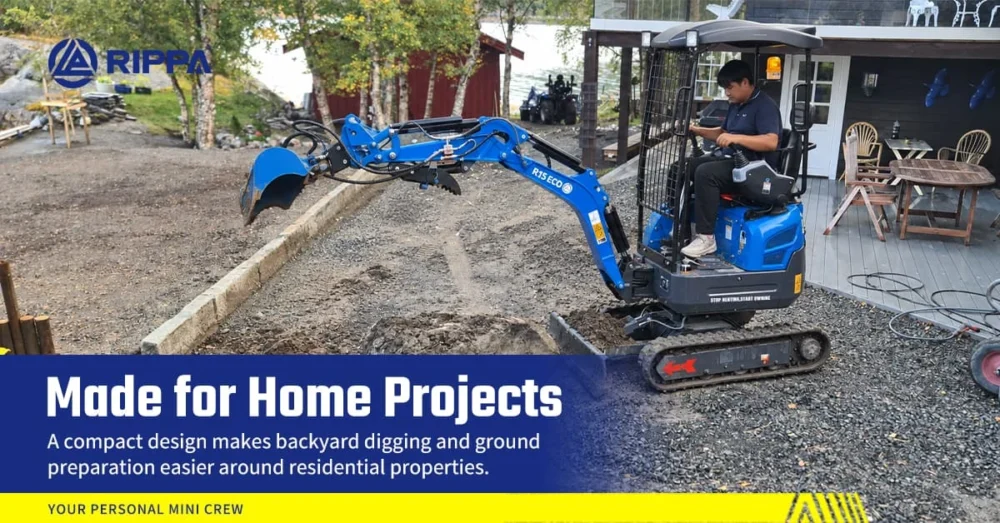
Before operating a mini excavator on a slope, assess the terrain, ground conditions, and equipment limitations.
Identify whether the working area has a longitudinal slope, cross slope, or a combination of both.
Use appropriate measuring equipment and compare the results with the manufacturer’s approved operating limits. Do not assume that all mini excavators have the same maximum slope capability.
Check the surface for loose soil, standing water, cracks, erosion, and signs of previous ground movement.
Pay particular attention to areas near trench edges, embankments, and recently disturbed ground.
Consider whether the tracks can maintain sufficient grip under current conditions.
Wet clay, loose gravel, and muddy surfaces may significantly reduce traction and increase the risk of sliding.
Machine stability can change depending on operating configuration, attachment selection, load position, and working equipment.
When comparing a mini excavator for sale, review the manufacturer’s operating specifications, machine weight, and slope restrictions rather than relying only on advertised specifications.
Identify access routes, underground utilities, nearby structures, overhead hazards, and potential escape routes.
If ground stability or operating conditions cannot be verified, postpone the work until the risks have been properly assessed.
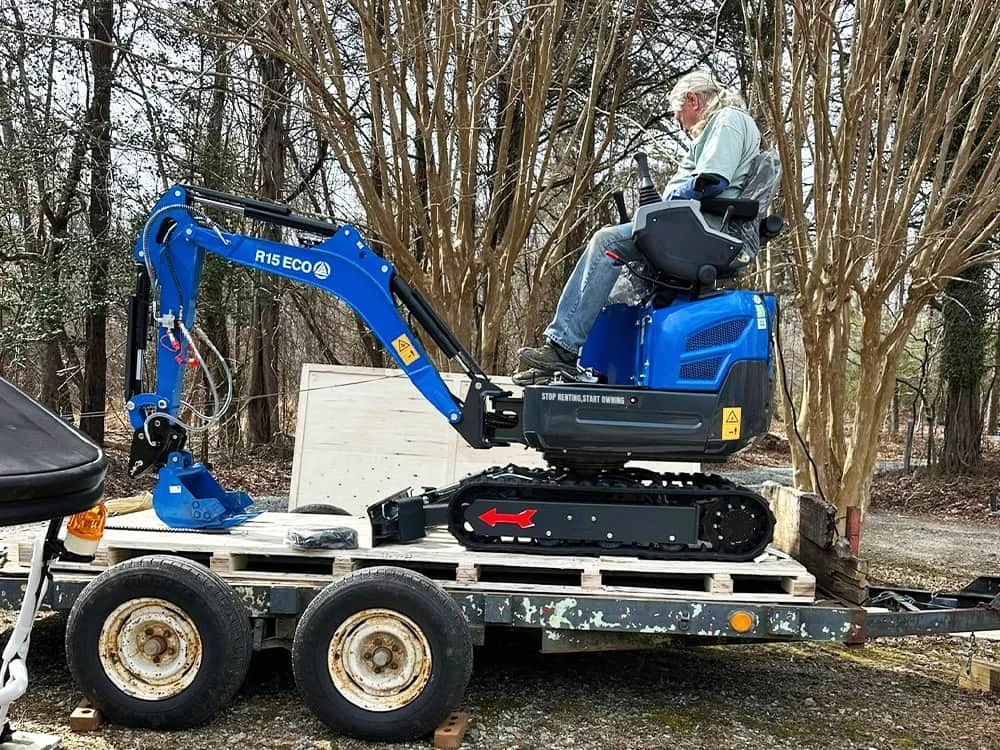
Correct machine movement and positioning are essential for reducing the risk of sliding and rollover accidents.
Choose a route that follows the manufacturer’s guidance for slope travel.
Avoid unnecessary cross-slope movements, sudden directional changes, and routes with loose materials or unstable edges.
The safest travel direction depends on machine design, slope conditions, and the operating manual.
Operate at a controlled speed appropriate for the terrain.
Avoid sudden acceleration, abrupt braking, and sharp turns that could affect machine balance.
Position the machine on suitable ground with adequate support.
Keep attachments and loads within the manufacturer’s recommended operating configuration. Avoid movements that unnecessarily shift the machine’s center of gravity.
Whenever possible, park on firm, level ground.
If temporary parking on a slope is unavoidable, follow the manufacturer’s parking and securing procedures, lower working equipment as instructed, and prevent unauthorized access.
Do not rely on the travel motor alone to secure a parked machine.
If the tracks begin slipping, the ground starts moving, or the machine becomes unstable, stop the operation and follow the manufacturer’s emergency procedures.
Never attempt risky movements to recover an unstable machine without appropriate guidance.

Excavation activities can change machine balance, particularly when working on uneven ground or near slope edges.
Position the excavator on stable ground before beginning excavation.
Maintain an appropriate distance from unsupported edges and avoid positioning the machine where excavation could undermine its supporting ground.
Operate the boom, arm, and bucket smoothly.
Avoid sudden movements, excessive loads, and unnecessary attachment extensions that could affect machine stability.
Plan the excavation sequence according to the site layout and manufacturer instructions.
Avoid digging in a way that removes supporting soil beneath the machine or creates unstable working surfaces.
Watch for track movement, uneven settling, ground cracks, and unexpected machine tilting.
If any signs of instability appear, stop work and reassess the site.
When evaluating a small excavator for sale or compact excavators for sale, compare operating weight, track configuration, working range, and manufacturer-approved slope limitations.
A smaller machine is not automatically safer on every slope. Its suitability depends on the actual terrain and operating configuration.

Regular mini excavator maintenance helps maintain equipment reliability and reduces the possibility of unexpected mechanical problems during slope operations.
A mini excavator inspection checklist should cover:
Any defect that could affect safe operation should be addressed before work begins.
Tracks and undercarriage components are particularly important when operating on uneven terrain.
Remove accumulated mud and debris, inspect track wear, and follow the manufacturer’s instructions for track tension.
Inspect hydraulic hoses, connections, and cylinders for damage or leakage.
Follow the recommended maintenance schedule for hydraulic fluids, filters, and related components.
Record mini excavator operating hours and use them to plan scheduled servicing and component inspections.
Regular maintenance records help identify developing problems before they affect equipment performance.
When evaluating a mini excavator price, consider more than the initial purchase cost. Equipment specifications, maintenance requirements, technical documentation, and long-term parts support also matter.
For international dealers, selecting a reliable Chinese mini excavator supplier can support equipment sourcing and after-sales coordination.
RIPPA is a construction machinery manufacturer serving international equipment buyers and potential distribution partners.
Dealers and importers interested in expanding their machinery business can explore RIPPA distributor opportunities to discuss equipment supply, technical information, maintenance support, and potential long-term dealership cooperation.
Only when the specific machine, ground conditions, and operating configuration meet the manufacturer’s approved limits. Steep slopes require additional risk assessment and appropriate safety measures.
Follow the manufacturer’s specified travel direction and slope restrictions. Avoid cross-slope travel unless it is explicitly permitted for the machine and site conditions.
Assess ground stability, remain within approved operating limits, control loads and attachment movements, and avoid sudden turns or operation near unsupported edges.
Tel: +8615628788742
E-mail: contact02@rippa.com
WhatsApp: Rippa kotrógép
Cím: Jining város, Shandong tartomány, Kína

 HU
 EN
 ES
 IT
 FR
 RU
 DE
 PT
 TR
 BG
 HR
 RO
 CS
 NN
 SL
 SV
 SK
 DA
 FI
 PL
 PT_BR

