Driveway preparation is an important stage of residential construction, landscaping, and property improvement. Before installing gravel, asphalt, or concrete, the ground must be cleared, excavated, graded, and prepared to support the finished driveway.
For contractors and equipment buyers comparing mini excavators for sale, compact excavation equipment can provide practical solutions for removing topsoil, shaping the driveway base, handling gravel, and preparing the site for subsequent construction.
Successful driveway preparation requires more than simply leveling the ground. Operators must follow the planned excavation depth, maintain proper drainage, and prepare a stable foundation. Understanding each construction stage helps contractors select suitable equipment and complete projects efficiently.
Mini excavators for sale can support several driveway preparation tasks, including clearing vegetation, removing unsuitable soil, excavating the driveway area, grading the ground, and distributing base materials.
The first step involves removing grass, roots, loose debris, and other materials from the planned driveway.
A mini excavator can use a suitable bucket to remove surface materials and transfer excavated soil to a designated location.
After clearing, operators can excavate the driveway area according to the required depth and dimensions.
Controlled digging helps remove unsuitable material while maintaining the planned construction boundaries.
Mini excavators can also help shape the driveway surface and distribute gravel or other approved base materials.
However, final compaction requires appropriate compaction equipment rather than relying on the excavator alone.
When comparing mini excavators for sale, buyers should consider digging depth, machine width, working range, attachment compatibility, and the conditions of the intended construction site.

Proper site clearing and excavation help establish a suitable foundation for driveway construction.
Start by identifying the planned driveway width, length, access points, and finished surface elevation.
Use stakes, marking paint, or surveying equipment to establish the excavation boundaries.
Before digging, contact the appropriate utility locating service to identify underground cables, pipes, and other buried infrastructure.
Use the excavator bucket to remove grass, roots, organic material, and unsuitable topsoil.
These materials should not remain beneath the driveway foundation because they may contribute to settlement or unstable ground conditions.
Separate reusable topsoil from unsuitable material where practical.
Excavate gradually until the specified foundation depth is reached.
The required depth depends on soil conditions, expected vehicle loads, drainage requirements, and the selected driveway surface.
Avoid excavating deeper than necessary or disturbing stable soil outside the designated area.
When evaluating a mini excavator for sale, contractors should consider the machine’s digging capability and access requirements for driveway excavation projects.
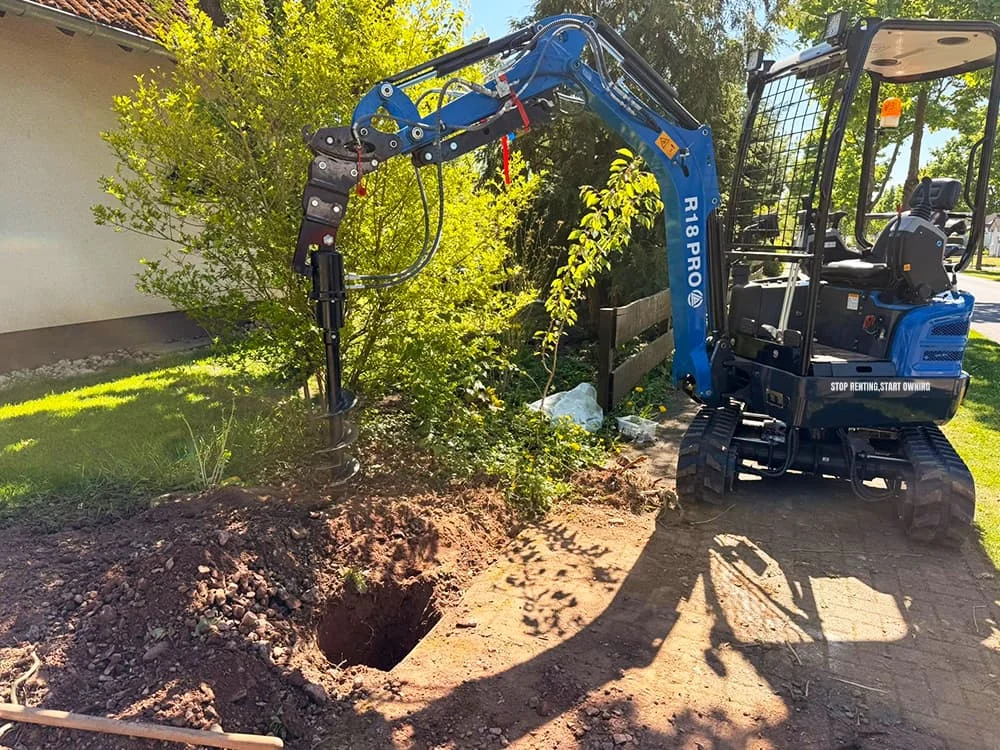
After excavation, the exposed ground must be shaped to establish the correct driveway profile and drainage direction.
Use the project design to determine the driveway’s longitudinal and cross slopes.
Proper grading helps direct surface water toward appropriate drainage areas rather than allowing it to collect on the driveway.
Operators should use suitable measuring equipment to check elevations throughout the work.
A small excavator for sale can be useful for controlled grading in residential driveways and restricted construction areas.
Use the bucket to remove excess soil from high spots and redistribute suitable material where necessary.
Any additional fill should meet the project requirements and be compacted using appropriate equipment.
Inspect the exposed subgrade for soft spots, loose soil, and uneven areas.
Unsuitable material should be removed or treated according to the site preparation requirements.
Contractors comparing compact excavators for sale should consider maneuverability, grading control, machine stability, and available working space.
The finished subgrade should match the specified elevation and provide a suitable foundation for the next construction stage.

Gravel placement is an important part of preparing a stable driveway base. Proper material distribution helps create a uniform surface for subsequent compaction and paving.
Different mini excavator accessories can support gravel handling and grading operations.
A general-purpose bucket can move aggregate, while a compatible grading bucket may help distribute material and improve surface consistency.
Attachment selection should consider bucket width, material type, machine capacity, and working conditions.
Transport suitable gravel or specified aggregate from the stockpile to the prepared driveway area.
Place the material in controlled quantities to avoid excessive accumulation in one location.
Maintain clear equipment access routes and prevent stockpiles from obstructing nearby structures or drainage paths.
Use controlled bucket movements to distribute the aggregate across the driveway.
Follow the project specifications for material type, layer thickness, and finished elevation.
Where required, place aggregate in multiple layers rather than one thick layer.
After grading, inspect the surface for uneven areas and material segregation.
Use suitable compaction equipment to achieve the required density.
The excavator assists with material placement and shaping, but it should not replace the specified compaction process.
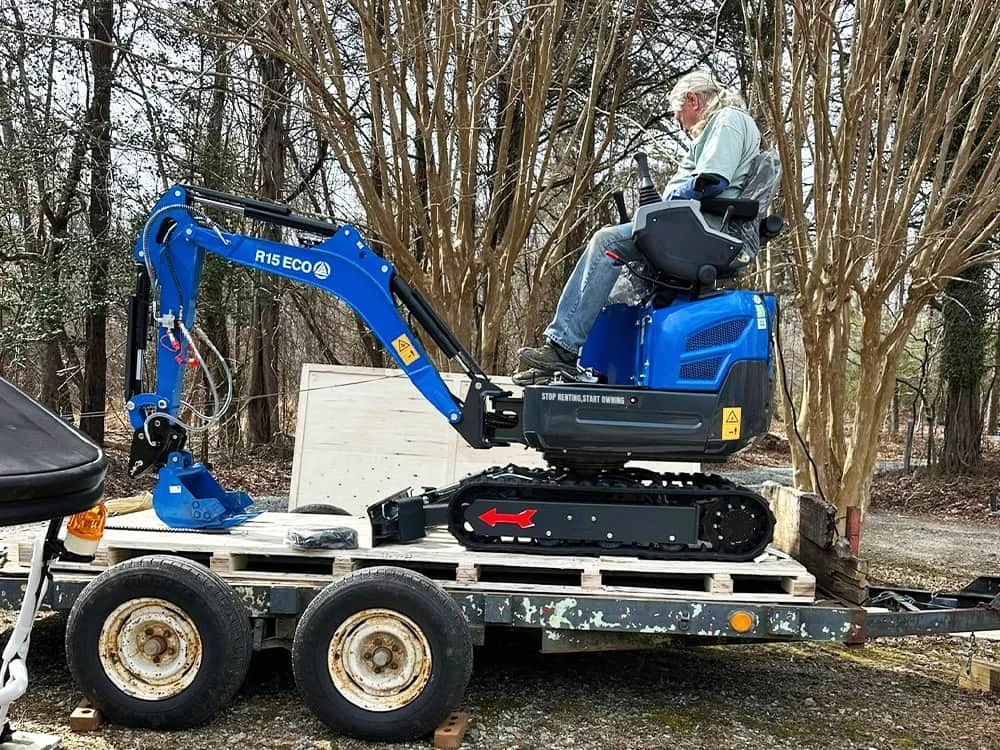
The final preparation stage involves checking the driveway base and ensuring that the excavator remains in suitable condition for future work.
Inspect the prepared driveway surface using appropriate leveling equipment.
Confirm that the finished base follows the planned slope and drainage direction.
Low areas that could collect water should be corrected before final paving begins.
Check that the specified base materials have been placed and compacted according to project requirements.
Any visible settlement, soft spots, or uneven areas should be addressed before installing the driveway surface.
The final base should provide a suitable foundation for the planned gravel, asphalt, or concrete finish.
After excavation and gravel handling, inspect important mini excavator parts, including bucket teeth, attachment pins, hydraulic hoses, tracks, and undercarriage components.
Remove accumulated gravel, soil, and debris from areas where material may interfere with moving components.
Regular mini excavator maintenance helps operators identify wear and potential mechanical problems after demanding earthmoving work.
Use a mini excavator inspection checklist to review fluid levels, hydraulic connections, attachment locking mechanisms, and visible equipment condition.
Follow the manufacturer’s instructions for cleaning, lubrication, and scheduled servicing.
Driveway preparation demonstrates how compact construction equipment can support excavation, grading, gravel handling, and landscaping applications.
For international machinery dealers, understanding these applications helps identify customer needs and recommend equipment suitable for local construction markets.
RIPPA welcomes international distribution partners interested in mini excavator sourcing and long-term cooperation.
Explore RIPPA distributor opportunities to discuss potential equipment supply and dealership partnerships.
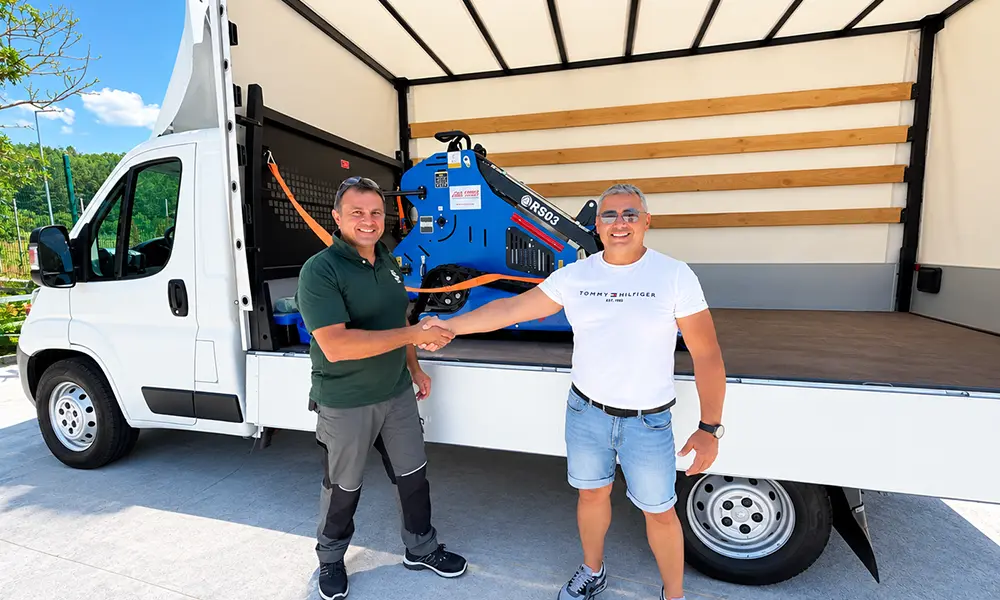
Yes. Mini excavators can clear soil, excavate the driveway area, grade the ground, and spread gravel before compaction.
General-purpose buckets are suitable for excavation and material handling, while compatible grading buckets can assist with surface preparation.
Mini excavator price depends on factors such as machine size, equipment configuration, attachment requirements, and supplier offerings.
Tel: +8615628788742
E-mail: contact02@rippa.com
WhatsApp: Rypadlo Rippa
Adresa: Šestý průmyslový park, město Jining, provincie Shandong, Čína

 CS
 EN
 ES
 IT
 FR
 RU
 DE
 PT
 TR
 BG
 HR
 RO
 NN
 SL
 SV
 HU
 SK
 DA
 FI
 PL
 PT_BR

