Installing an irrigation system requires careful planning, accurate trench excavation, proper pipe placement, and reliable backfilling. For agricultural fields, gardens, and landscaping projects, these steps help distribute water efficiently and support long-term irrigation performance.
For contractors comparing mini excavators for sale, compact equipment provides a practical solution for digging irrigation trenches, preparing pipe routes, and handling soil in areas where larger machinery may have limited access.
With suitable attachments and proper operating techniques, mini excavators can support several stages of irrigation installation. Understanding the complete process helps contractors select appropriate equipment and complete projects more efficiently.
Mini excavators can assist with multiple stages of irrigation system installation, from preparing the site to excavating trenches and restoring the ground.
Before installation, the working area needs to be cleared of vegetation, loose soil, and other obstacles.
A mini excavator can help remove surface materials and prepare the planned pipeline routes. This is particularly useful in agricultural fields and landscaping areas with limited access.
The machine can excavate narrow trenches for underground irrigation pipes.
Operators can control excavation depth and width according to the irrigation design, soil conditions, and pipe specifications.
Mini excavators can also assist with moving suitable materials, clearing excavated soil, and backfilling trenches after pipe installation and inspection.
When choosing a mini excavator for sale, contractors should consider digging depth, working range, machine width, and hydraulic compatibility with the intended attachments.

Proper site preparation helps prevent installation errors, pipe damage, and unnecessary excavation work.
Start by examining the land elevation, soil conditions, existing drainage routes, and water supply locations.
Identify the main irrigation line, branch connections, and planned pipe routes. The layout should follow the irrigation system design and account for the areas requiring water distribution.
Use stakes, marking paint, or suitable surveying tools to mark the planned pipeline routes.
Identify the locations of pipe connections, valves, and other irrigation components before digging.
Before excavation, locate underground electrical cables, water lines, drainage pipes, and other buried utilities through the appropriate local utility locating service.
Trench depth and width depend on pipe diameter, installation requirements, soil conditions, and local regulations.
The planned dimensions should provide sufficient space for pipe placement, bedding material, and protective backfill.
A suitable mini excavator inspection checklist should also be completed before work begins, covering hydraulic hoses, tracks, fluid levels, bucket connections, and operating controls.
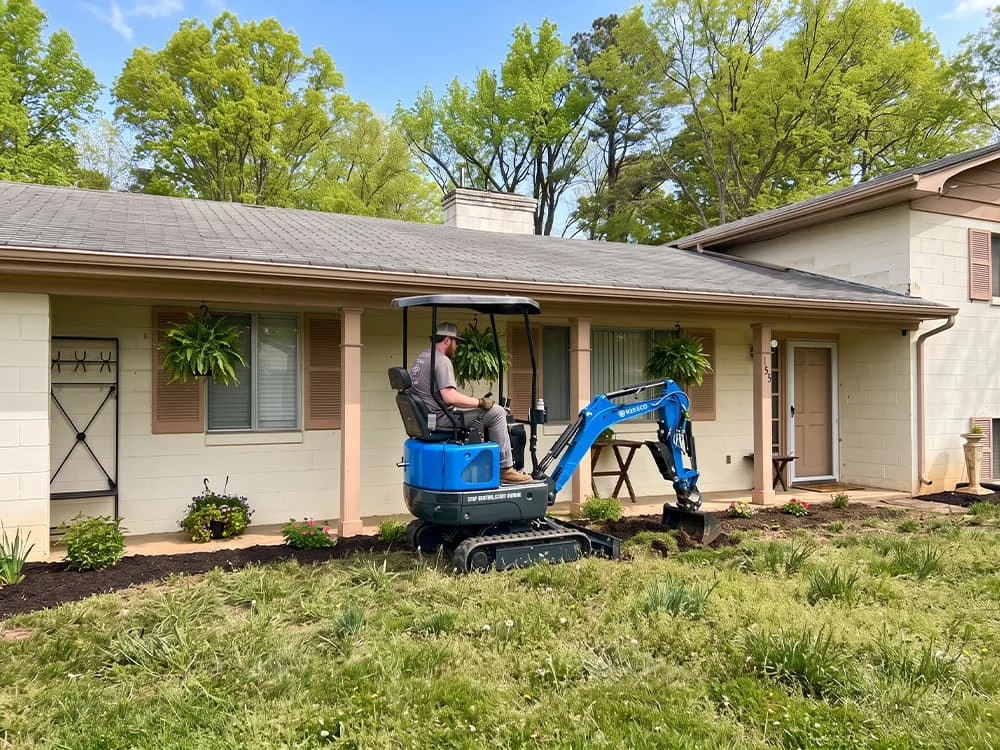
Accurate trench excavation is essential for protecting irrigation pipes and maintaining the designed water distribution system.
Select a bucket that matches the required trench width.
A narrow bucket can help reduce unnecessary soil removal, while a general-purpose bucket may be suitable for wider trenches and larger excavation tasks.
Operate the excavator along the marked pipeline route and maintain the specified trench depth.
Use suitable measuring or leveling equipment to check excavation dimensions and maintain the required alignment.
Avoid digging too deeply, as excessive excavation can increase backfilling work and material costs.
After excavation, remove loose stones, sharp objects, and unsuitable material from the trench bottom.
Where required by the irrigation design, prepare a suitable bedding layer to support the pipe and reduce the risk of localized damage.
A small excavator for sale may be useful for irrigation projects involving narrow working areas, agricultural plots, and landscaping installations.

Once the trenches are prepared, irrigation pipes must be positioned and connected according to the system design.
Different mini excavator accessories can support different installation tasks.
Common equipment options include:
Attachment selection should consider mounting dimensions, hydraulic requirements, machine capacity, and the specific construction task.
Place the pipes carefully along the prepared trench.
Check that pipe connections, fittings, valves, and branch lines match the installation layout.
Avoid dragging pipes across sharp rocks or placing heavy materials directly on unsupported pipe sections.
Before covering the pipes, inspect the alignment and connection points.
Depending on the irrigation system, perform the required pressure or leakage tests according to the pipe manufacturer’s instructions and project specifications.
When comparing compact excavators for sale, contractors should also consider attachment compatibility, working range, and machine stability when handling irrigation materials.
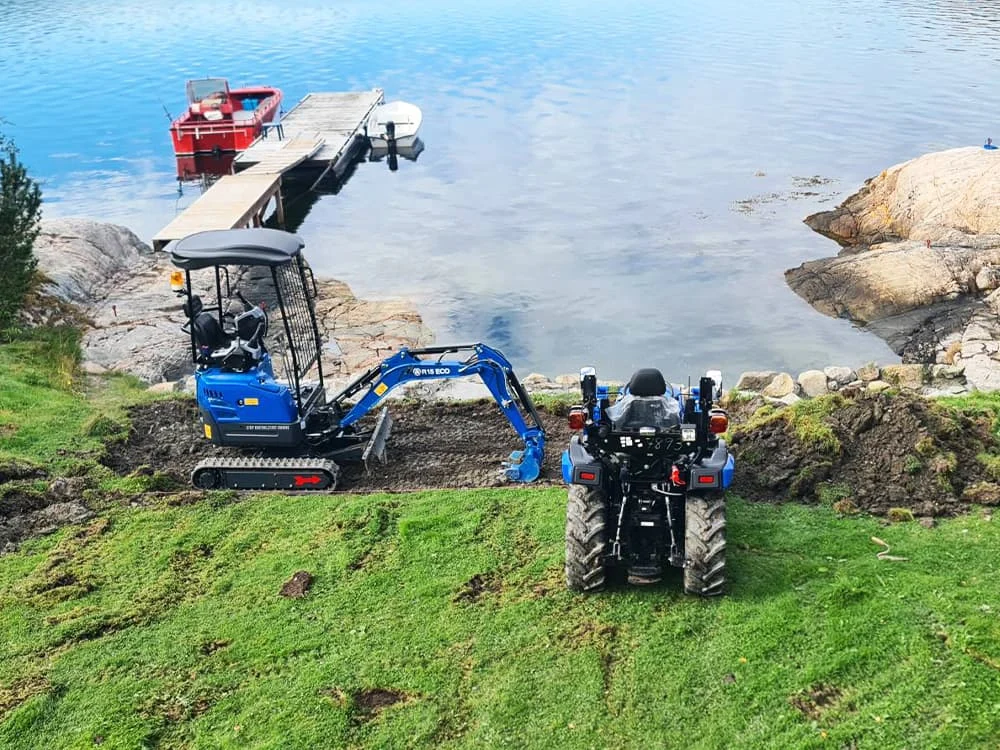
After the irrigation pipes have been installed and inspected, the trenches can be backfilled and the equipment prepared for future work.
Use suitable backfill material that meets the project requirements.
Place material in controlled layers to reduce the risk of pipe displacement or damage.
Avoid dropping large rocks or heavy soil directly onto the pipes. Follow the specified backfilling and compaction procedures.
After backfilling, use the excavator bucket or a suitable grading attachment to restore the ground surface.
Remove excess soil and ensure the finished area is suitable for subsequent agricultural or landscaping activities.
After installation, check important mini excavator parts, including bucket teeth, attachment pins, hydraulic hoses, tracks, and undercarriage components.
Remove accumulated soil and debris, especially around moving parts and attachment connections.
A consistent mini excavator maintenance routine helps keep the machine ready for future projects.
Check fluid levels, inspect hydraulic connections, clean the undercarriage, and examine attachments for visible wear.
Record inspection results and follow the manufacturer’s maintenance recommendations.
Irrigation installation demonstrates how mini excavators can support agricultural construction, trench excavation, and pipeline preparation.
For international machinery dealers, understanding these applications helps identify customer needs and recommend suitable equipment for agricultural and landscaping markets.
RIPPA welcomes international distribution partners interested in mini excavator sourcing and long-term cooperation. Explore RIPPA distributor opportunities to discuss equipment supply and potential dealership partnerships.
Yes. Mini excavators can dig irrigation trenches of suitable dimensions when the machine’s digging capabilities match the project requirements.
Narrow buckets are useful for smaller irrigation trenches, while general-purpose buckets are suitable for wider excavation and soil handling.
Burial depth depends on pipe specifications, soil conditions, climate, and local installation requirements. Follow the irrigation design and applicable regulations.
Tel: +8615628788742
Email: contact02@rippa.com
WhatsApp: Rippa Excavator
Address: The sixth industrial park,Jining city,Shandong Province,China

 EN
 ES
 IT
 FR
 RU
 DE
 PT
 TR
 BG
 HR
 RO
 CS
 NN
 SL
 SV
 HU
 SK
 DA
 FI
 PL
 PT_BR

